Animals and Objects
Animals and objects are often important elements in narrative paintings, helping to convey symbolic meaning pertinent to a story while also showing off an artist’s mimetic skills. In portraiture, animals and objects serve to convey information about the figure’s character and life.
By the late sixteenth century, the interest in depicting objects was such that still-life painting emerged across Europe as a category in its own right. In Spain, the term applied to this genre was ‘bodegón’ (‘bodegones’ in plural).
Still-life paintings were initially collected by a minority of enthusiasts but eventually reached larger audiences. The pioneering austere representations of fruit and vegetables, carefully arranged in shallow window frames by the Toledan painter, Juan Sánchez Cotán, were particularly influential. With each element sharply lit against a dark background, such compositions invite us to reappraise the significance and beauty of humble objects.
Many other artists followed Sánchez Cotán’s example. In the seventeenth century, artists specialized in sub-categories of still life, such as flower painting, which became popular for the decoration of palatial homes and ecclesiastical palaces.
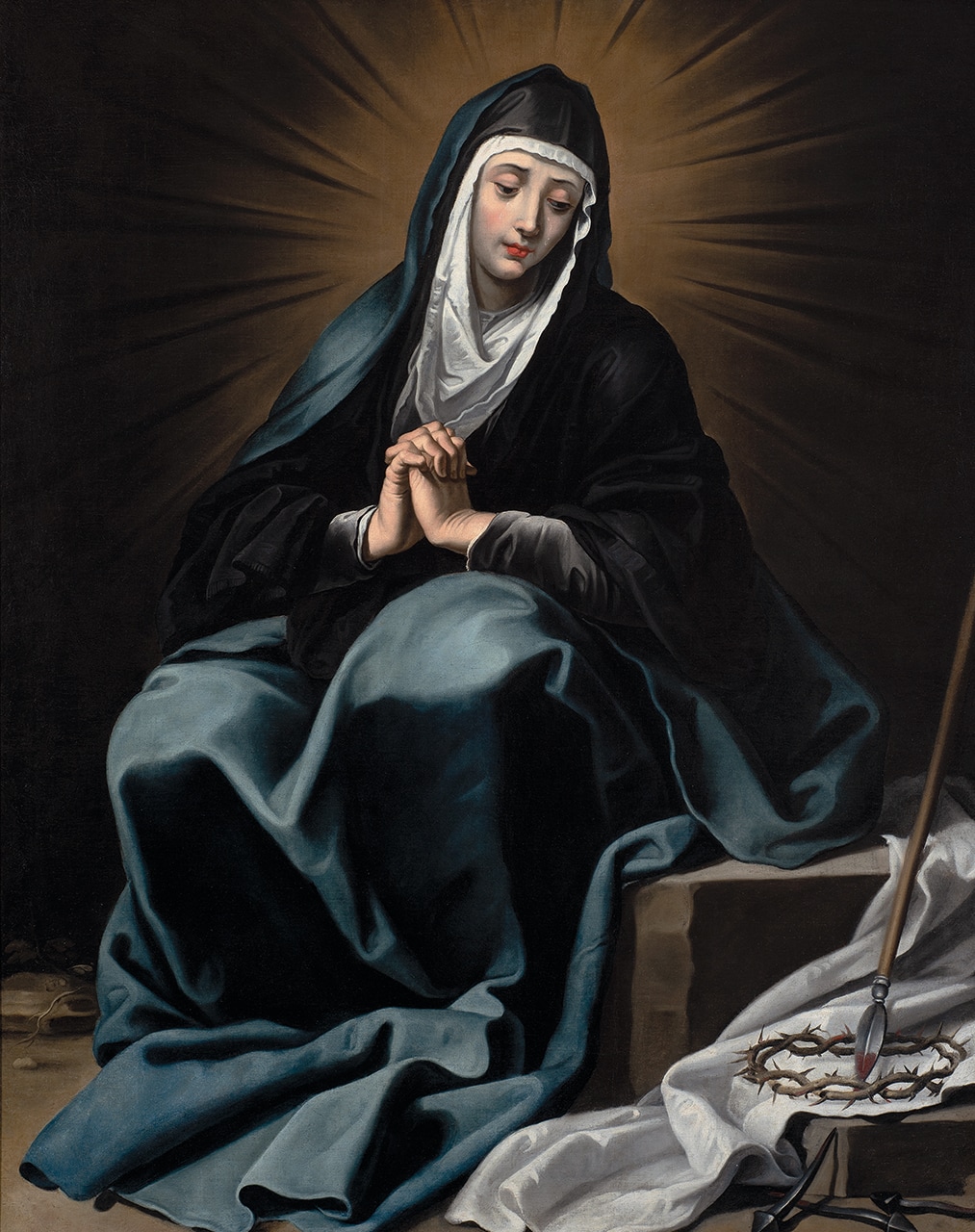
Mater Dolorosa
Attributed to Jerónimo Jacinto Espinosa, Seventeenth century.
The Spanish Gallery, Bishop Auckland.
Read the commentary
The Penitent Magdalene
Luis Tristán de Escamilla, c. 1620–24.
The Spanish Gallery, Bishop Auckland.
Read the commentary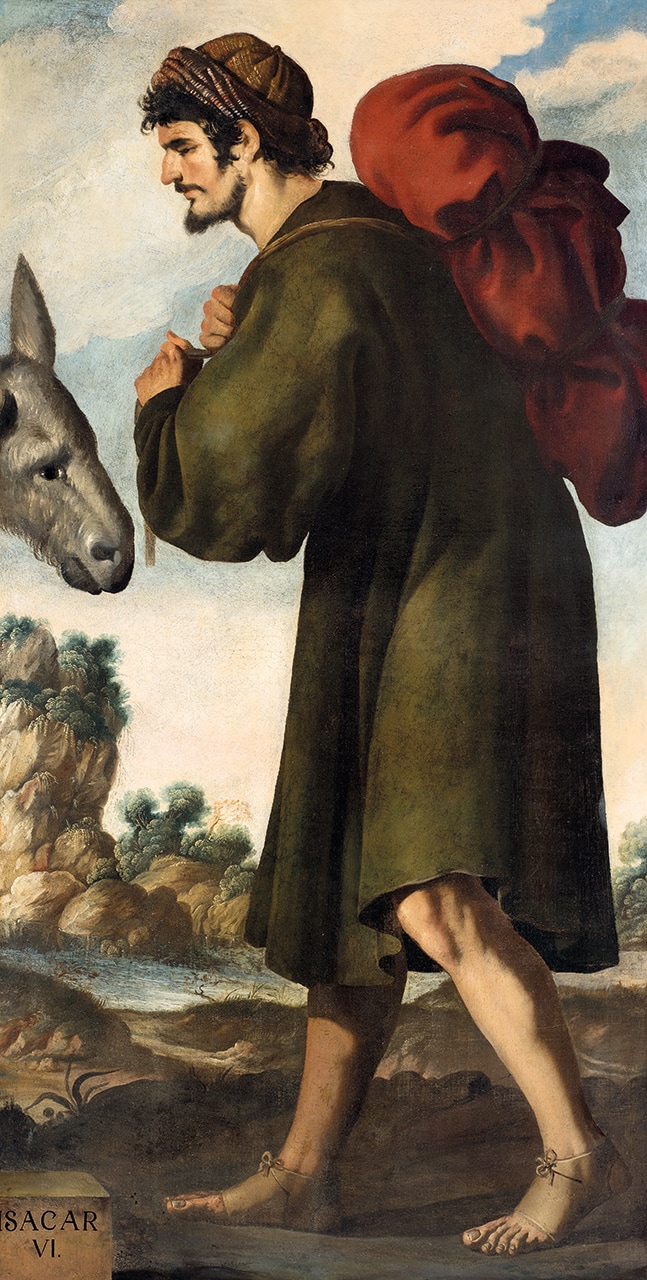
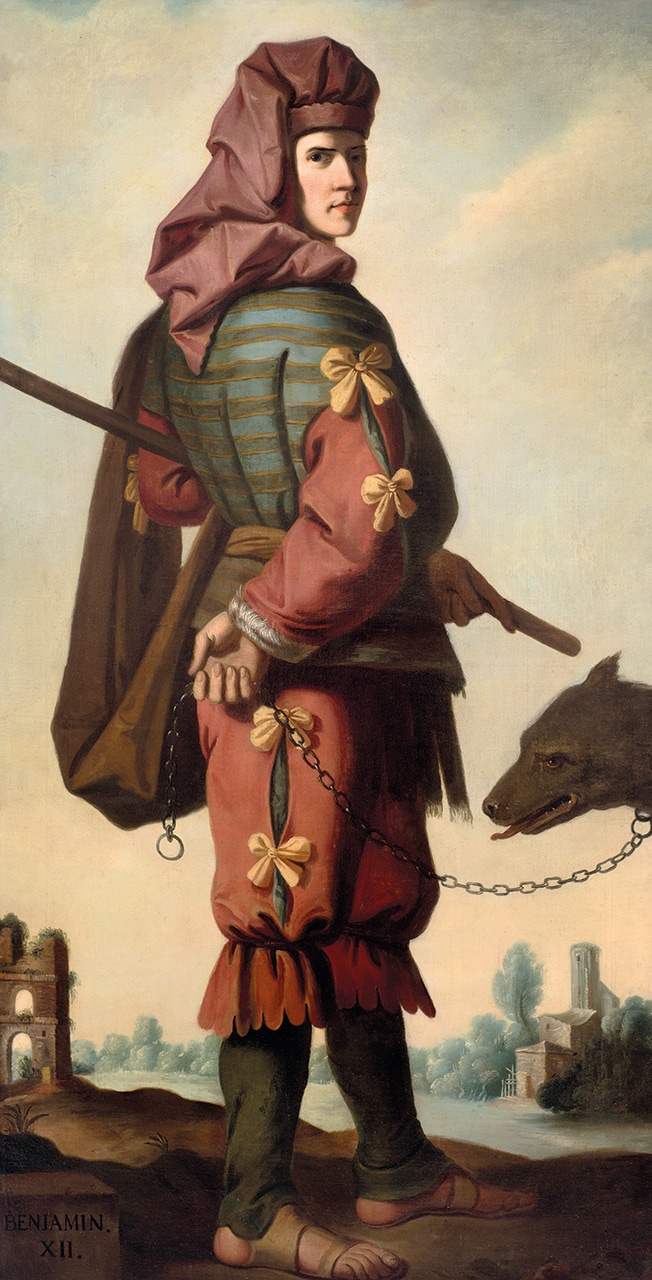
Benjamin
Arthur Pond, 1756.
Auckland Castle, Bishop Auckland.
Zurbarán portrays Issachar as a humble farmer, stooping forwards under the weight of the load on his back. His company on the road is a donkey, the sorrowful face of which mirrors the state of its master. By contrast, Benjamin, Jacob’s most beloved son, is depicted as a finely dressed youth. He is accompanied by a wolf on a chain, recalling the description of him as ‘a ravenous wolf’ (Genesis 49:27). In both images only the heads of the animals are visible, encouraging viewers to imagine the setting beyond the frame of the canvas.
Read the commentaryIssachar
Francisco de Zurbarán, c. 1640–45.
Auckland Castle, Bishop Auckland.
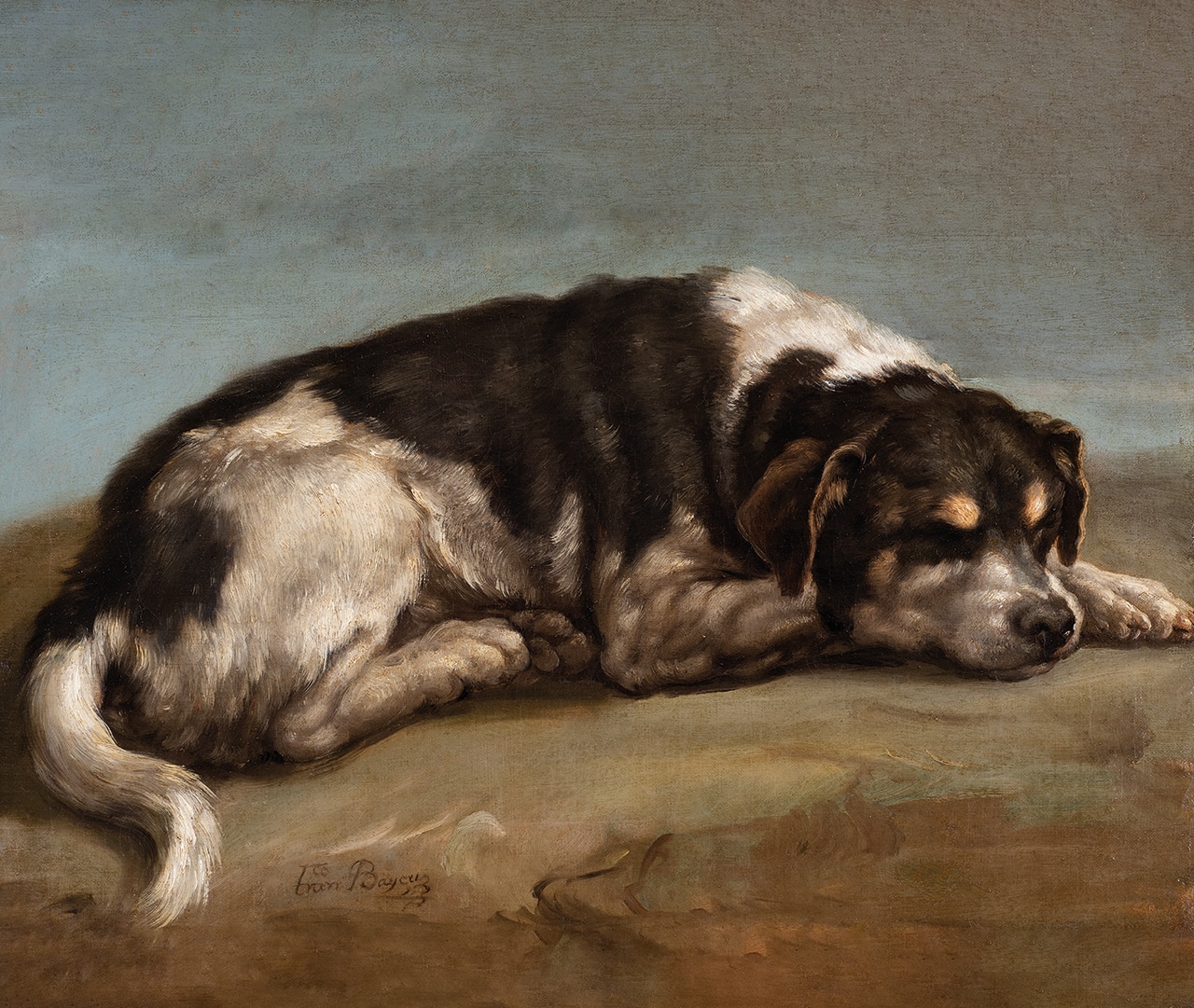
La Perra de Graus
Francisco Bayeu y Subías, c. 1788–89.
The Spanish Gallery, Bishop Auckland.
Read the commentary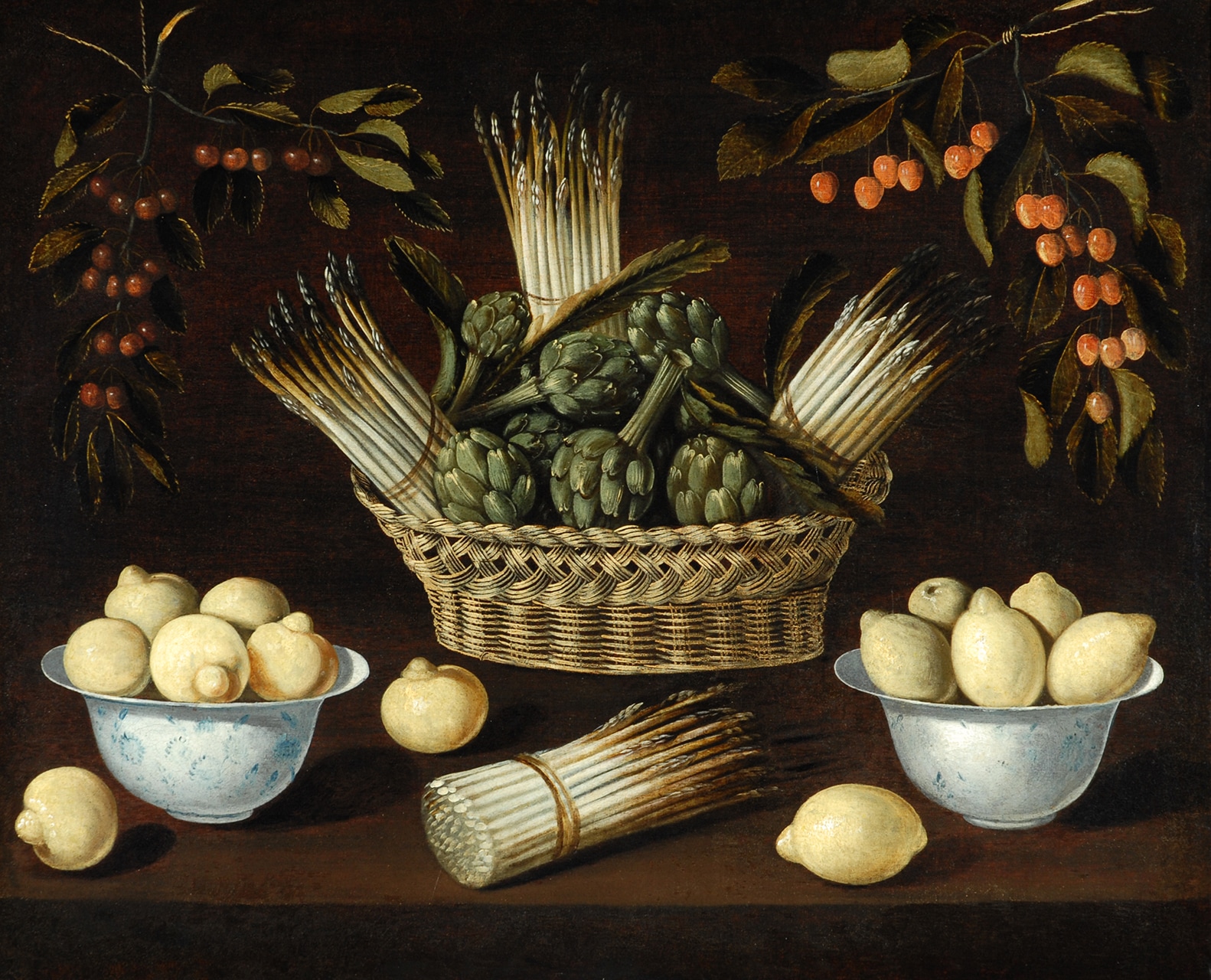
Still Life with Asparagus, Artichokes, Lemons, and Cherries
Attributed to Blas de Ledesma , c. 1602–14.
The Bowes Museum, Barnard Castle, B.M.69.
Read the commentary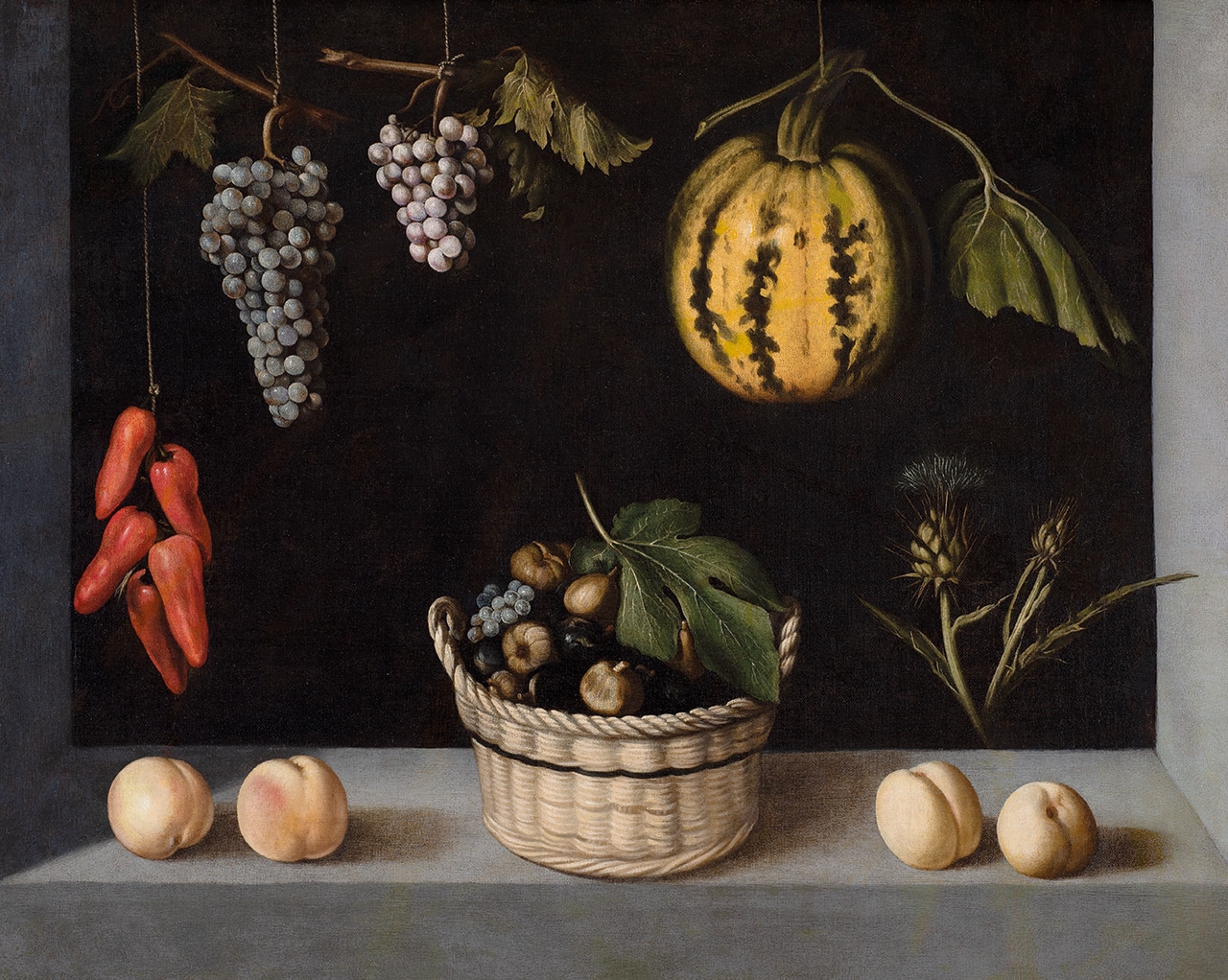
Still Life with Basket of Fruit, Melon, and Grapes
Attributed to the Stirling-Maxwell Master, c. 1610–40.
The Spanish Gallery, Bishop Auckland.
Read the commentary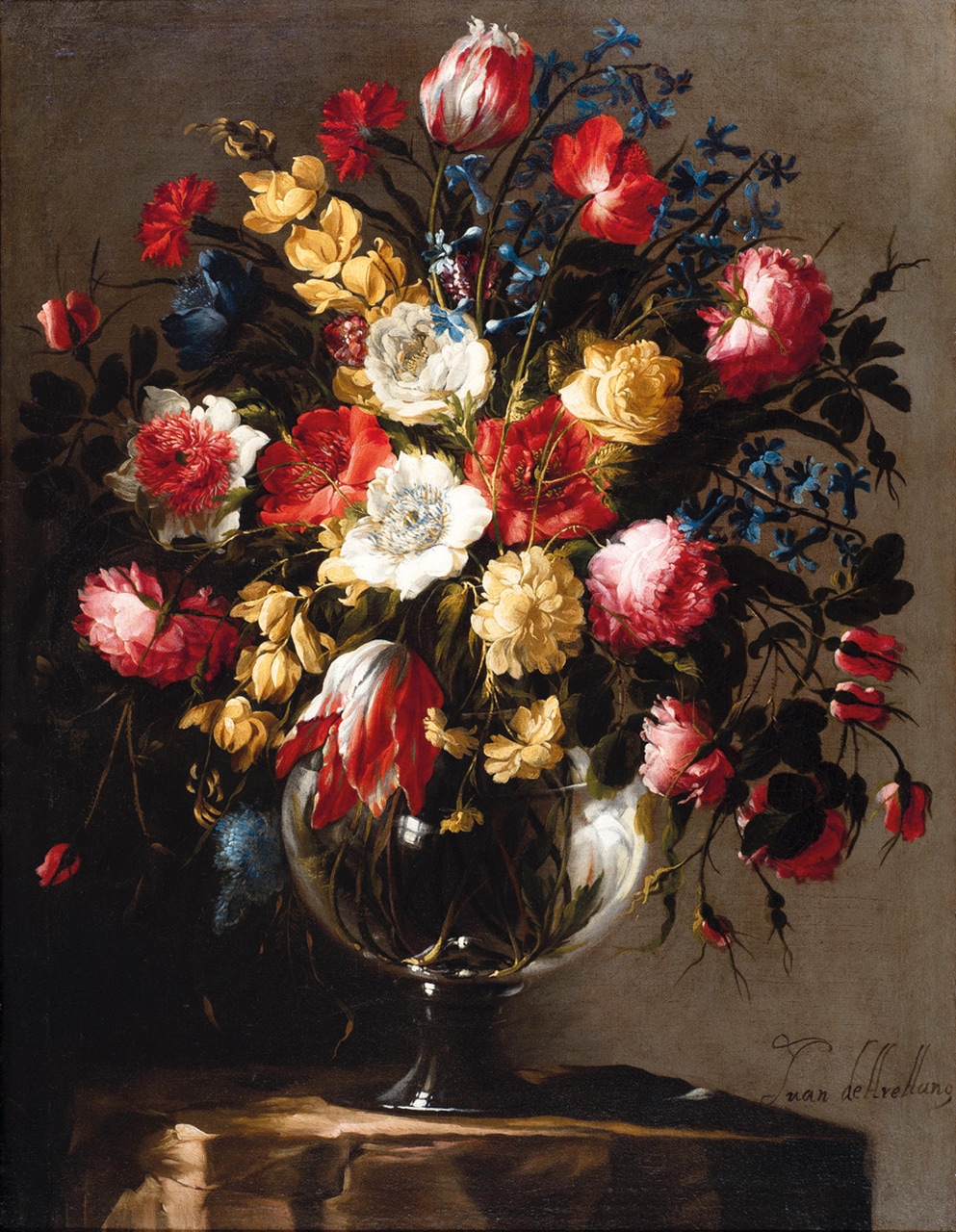
Still Life with a Large Array of Flowers in a Glass Vase on a Stone Pedestal
Juan de Arellano, c. 1660–76.
The Spanish Gallery, Bishop Auckland.
Read the commentary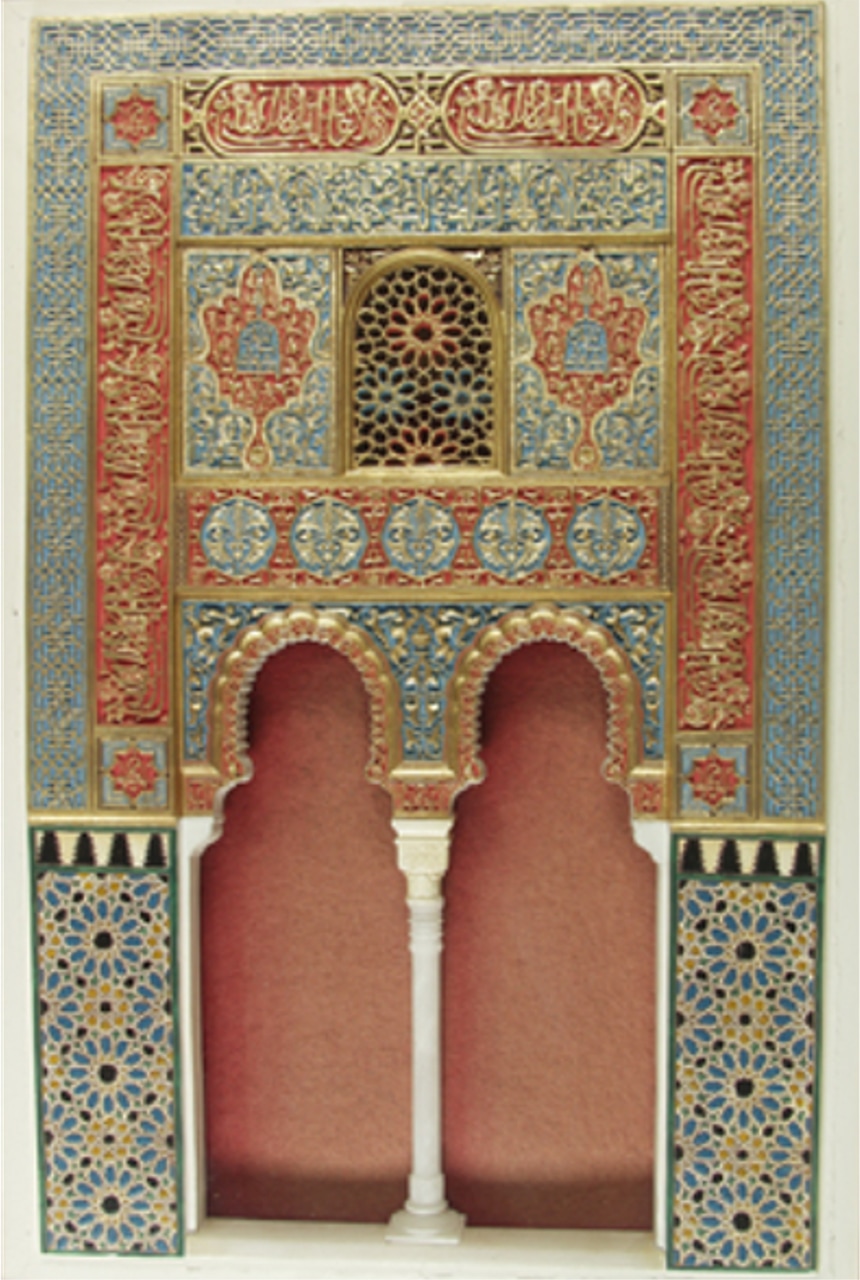
Architectural model of a façade of the Alhambra Palace, Granada
Unknown artist, c. 1890.
The Oriental Museum, Durham University.
Read the commentary