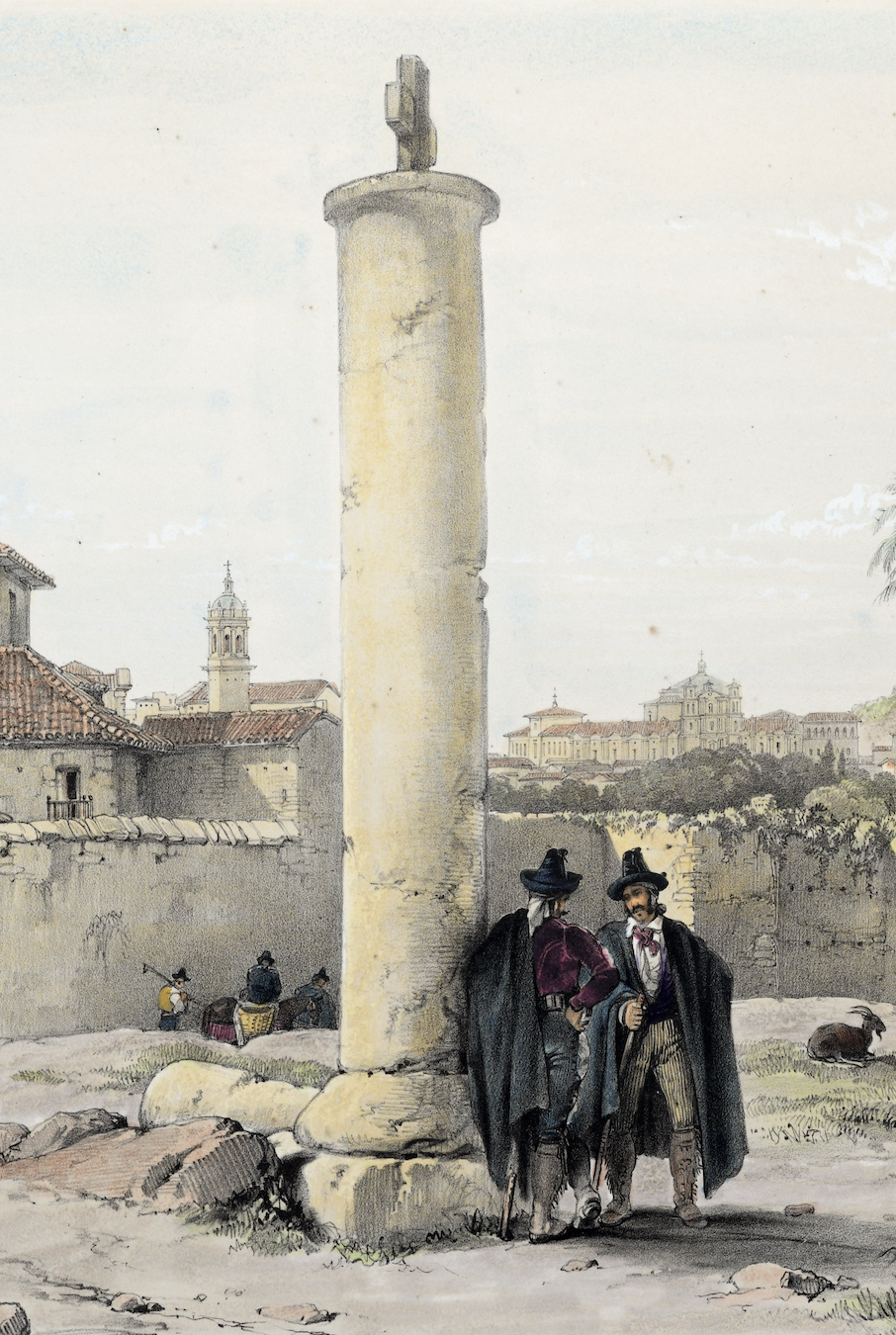





This exhibition celebrates the burgeoning British interest in Spain from the late eighteenth century to the mid-nineteenth century, as reflected in travelogues, prints, and drawings.
Over 70 items have been grouped into eight galleries. It starts with the pathfinders who blazed trails in the late eighteenth century, reporting back on geography, economy and politics, and those who fought alongside Spain and Portugal against Napoleon in the Peninsular War (1808-1814). The exhibition then progresses geographically, focusing on the Romantic period, which drew an unprecedented number of artists and writers to Spain. Drawing upon knowledge gained from earlier travelogues, these travellers arrived with new ways of seeing, transforming what they saw into a romanticised vision of a timeless Spain, unspoilt by industrialisation.
The centre of gravity of this exhibition is around 1833, coinciding with the end of absolutism and the presence of talented artists and writers in Spain. Key figures include David Roberts, John Frederick Lewis, and George Vivian, all of whom produced collectible fine art prints; Owen Jones, whose pioneering study of the Alhambra influenced contemporary architecture; Roberts’s Spanish protégé, Genaro Pérez Villaamil, who directed attention to northern Spain; Richard Ford, whose guidebook to Spain became a bestseller; and Harriet Ford, whose drawings showcase women’s contributions to the cultural discovery of Spain. Collectively, these artist-travellers helped to create an exotic image of Spain, which paved the way for tourism and continues to influence expectations today.
- Pathfinders
- Northwestern Spain
- Burgos, Segovia and El Escorial
- Madrid and Toledo
- Eastern Spain
- Andalucía
- Seville
- Granada
How to visit this exhibition: Please scroll to reveal the portals into the eight galleries. To enter a gallery, click on ‘explore’. Once you have entered a gallery, scroll to discover the images. To find out more about a work, click on ‘read the commentary’. Your feedback is important to us, please share and comment on your responses to what you have seen.
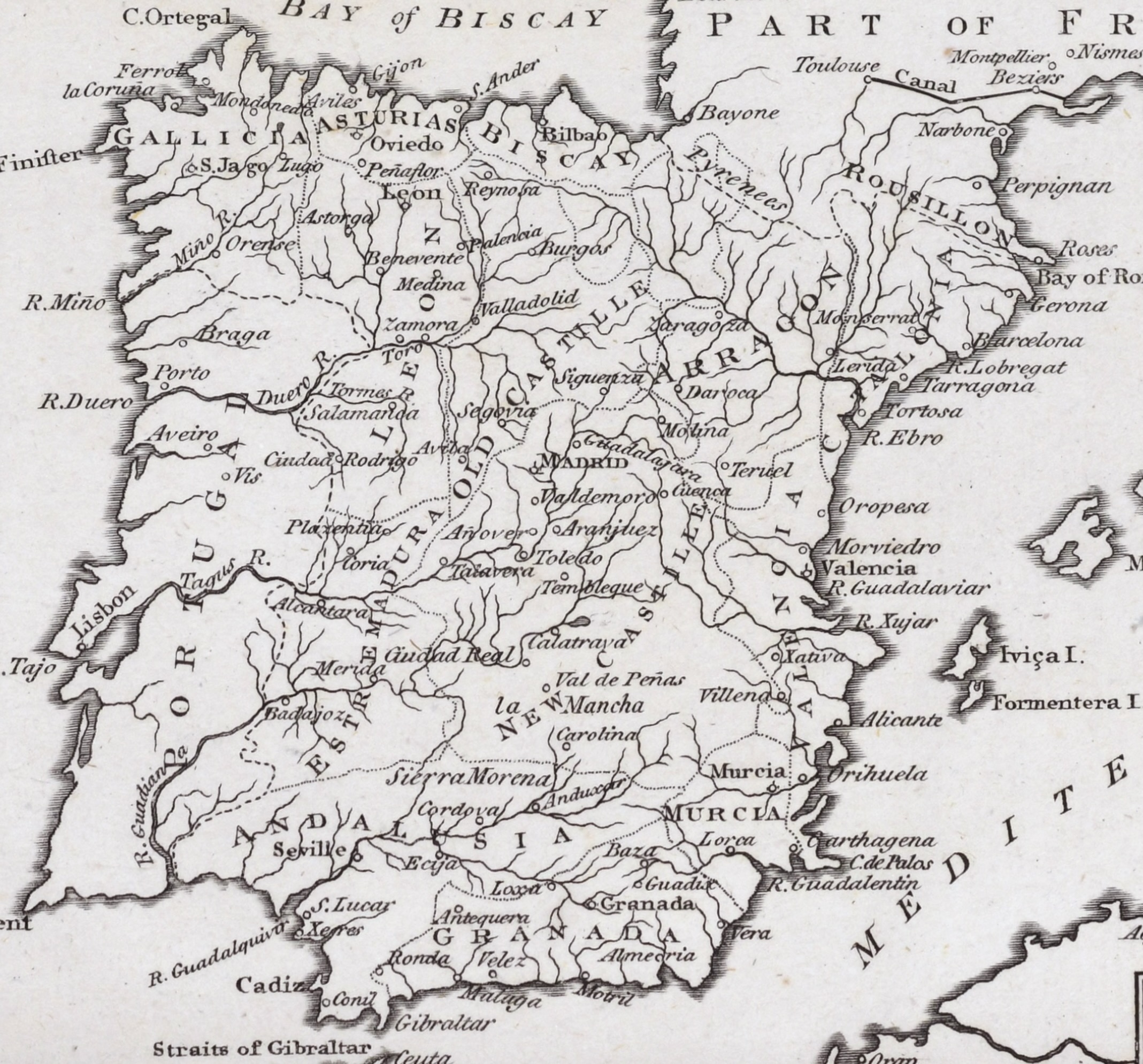
Pathfinders
Britons who travelled for pleasure or education did not consider Spain as a possible destination until the early nineteenth century. Spain had never been part of the traditional Grand Tour, which took privileged travellers to Germany, France, Italy, and Greece. But towards the end of the eighteenth century Spain started to become an optional extra for those whose appetite was not fully satisfied by the Grand Tour.
Explore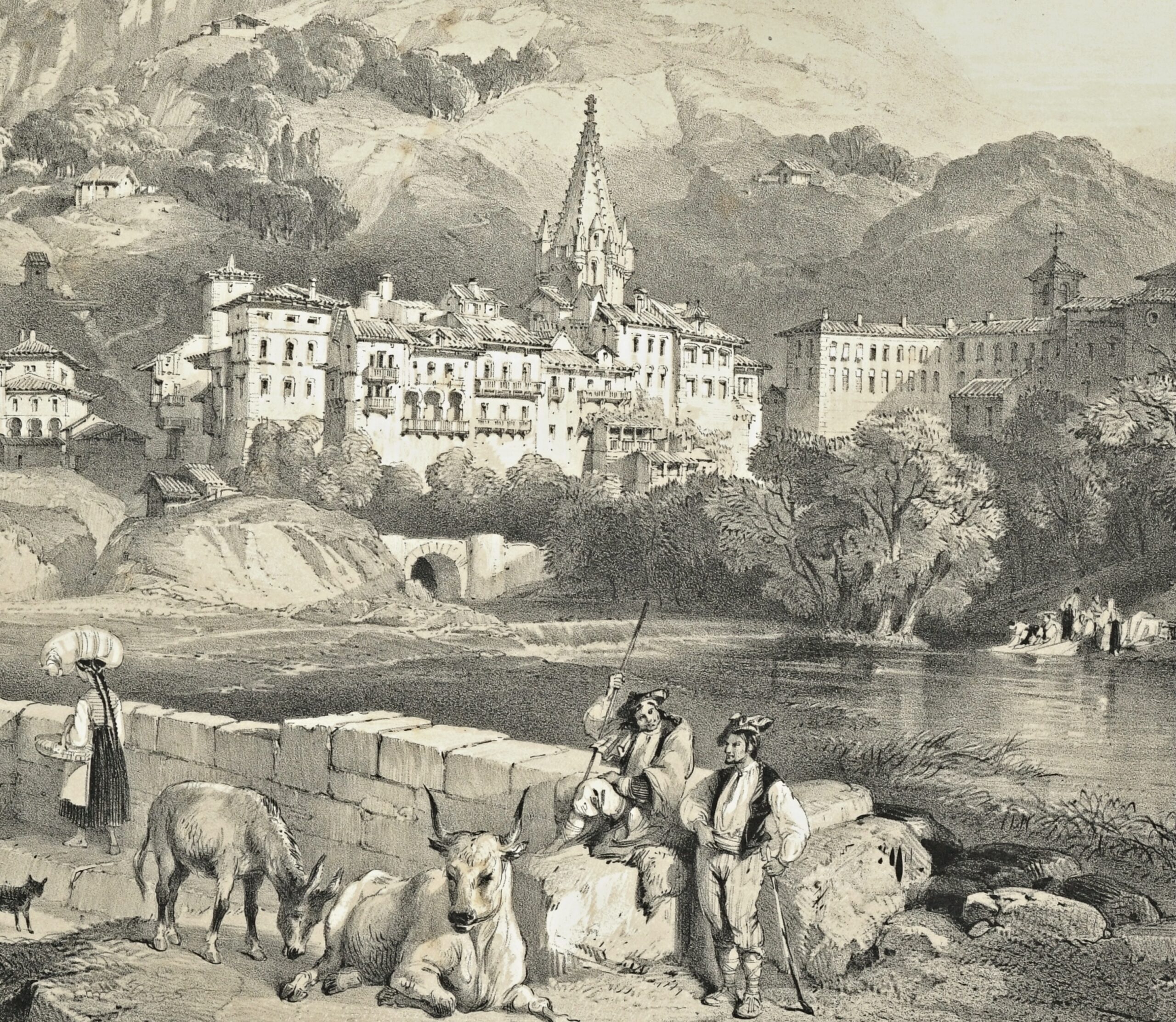
Northwestern Spain
Northern and western Spain feature comparatively rarely in illustrated travelogues and albums of lithographs during the Romantic period, but those travellers who entered Spain via the western Pyrenees found much to admire.
Explore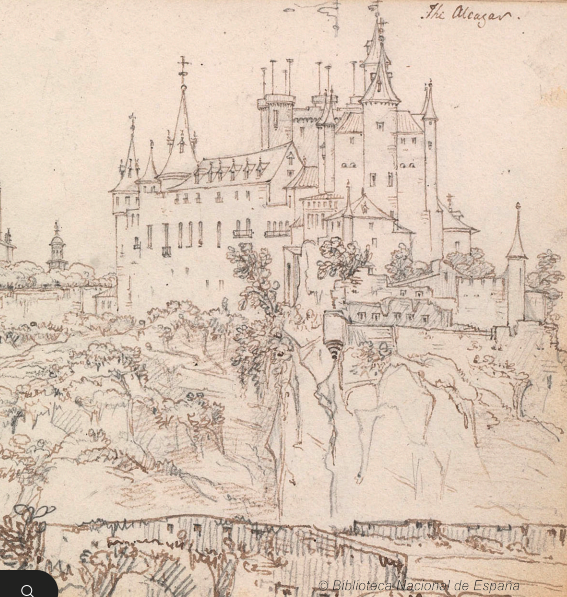
Burgos, Segovia and El Escorial
Those visitors like George Vivian who sought out the site of the Battle of Vitoria in the north of Spain, soon re-joined what eventually became the well-trodden path through Old Castile to Madrid, via three major attractions: Burgos, the ancient capital of the kingdom of Castilla y León under Alfonso VI in the eleventh century; Segovia, historic centre of the wool and textile trade; and Philip II’s palace-monastery and royal pantheon at El Escorial.
Explore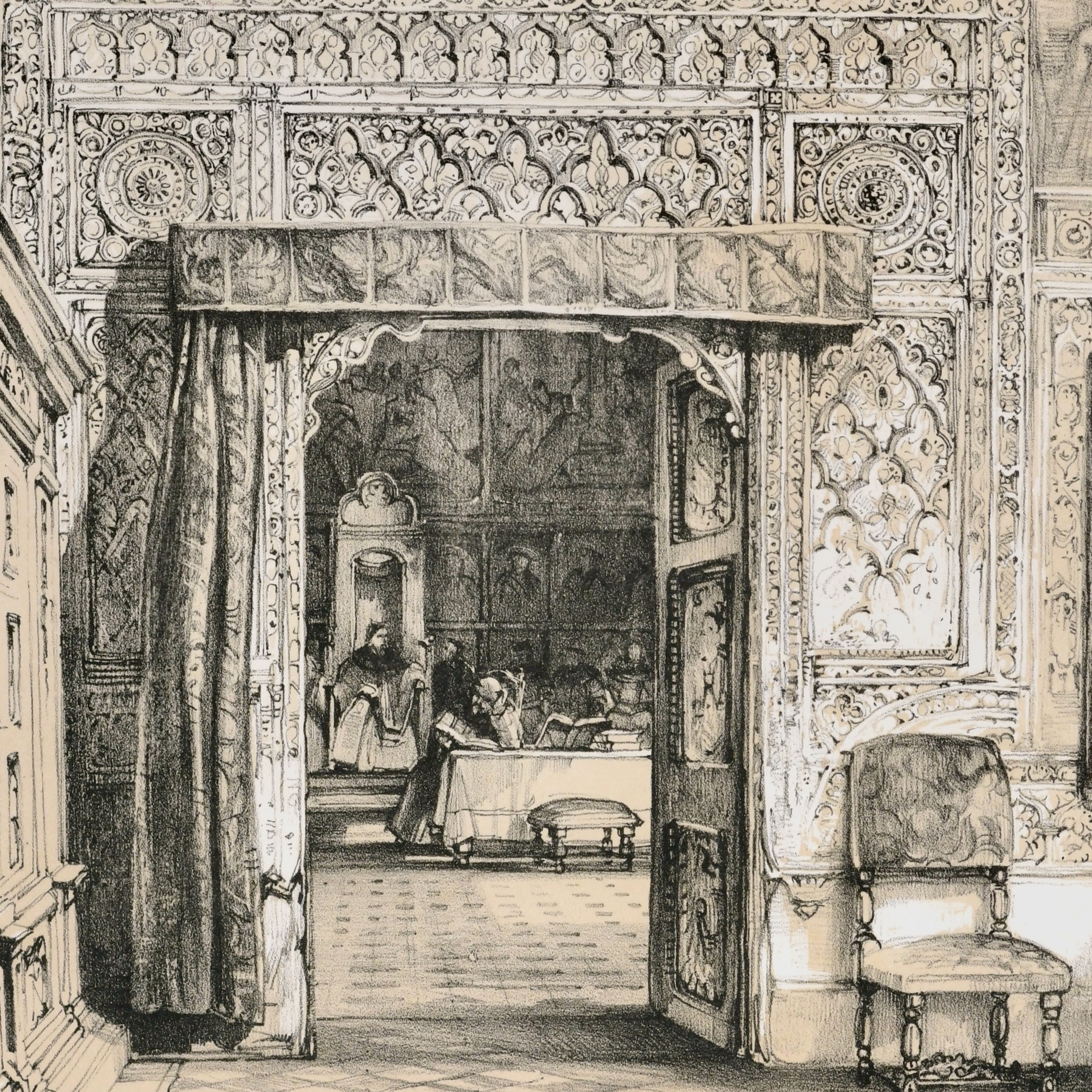
Madrid and Toledo
Located halfway along the route from Biscay to Andalucía, the capital of Spain became part of the travellers’ experience of Spain. Founded as ‘Mayrit’ under Umayyad rule in the ninth century, Madrid gained prominence as a political and cultural centre under King Philip II, who established his court there in 1561.
Explore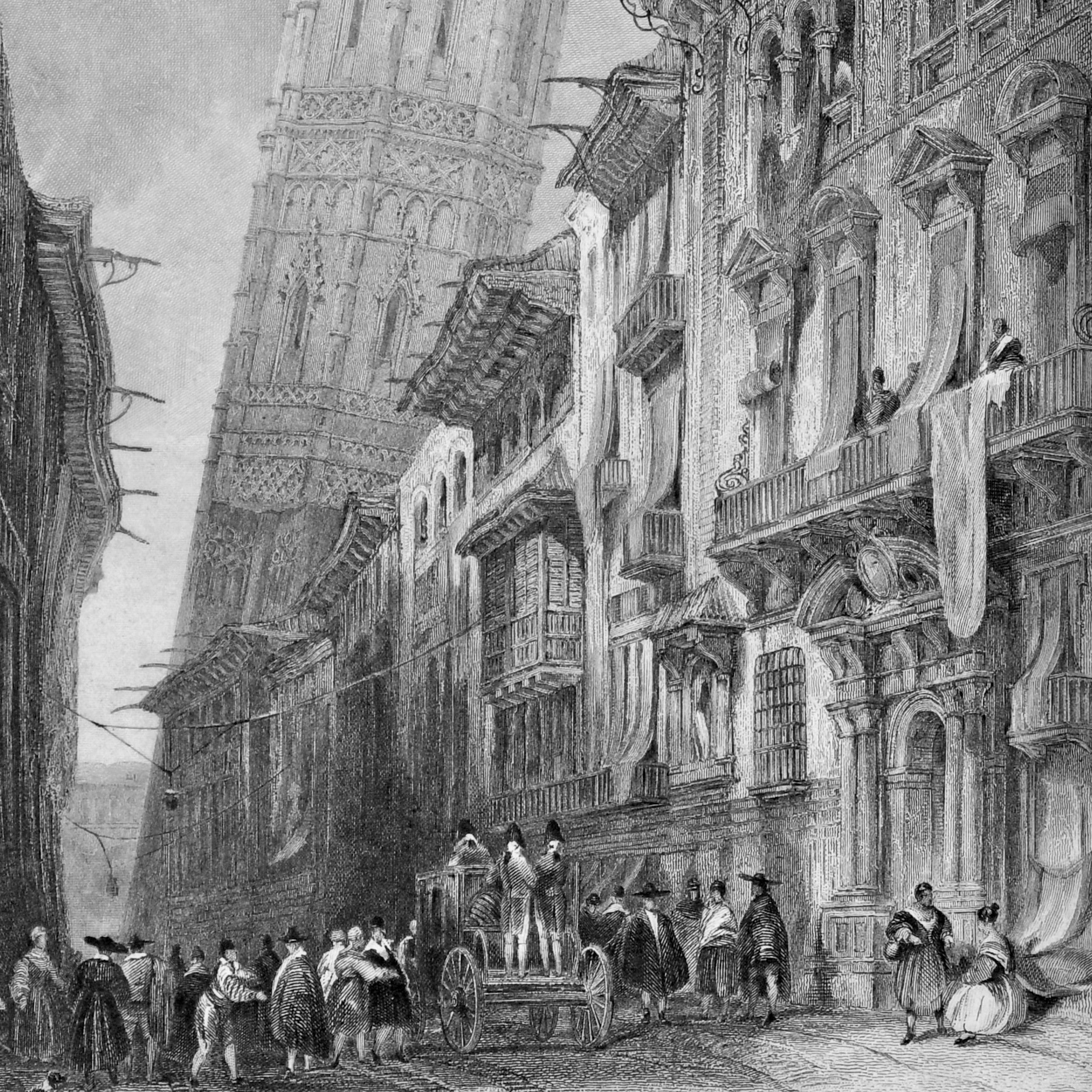
Eastern Spain
The eastern cities and landscapes of Spain were seldom explored in the early nineteenth century, as most travellers made a beeline from the Basque country via Castile to Andalucía. Neither John Frederick Lewis nor David Roberts visited eastern Spain, and the first three volumes of Thomas Roscoe’s The Tourist in Spain, illustrated by Roberts, overlooked this area.
Explore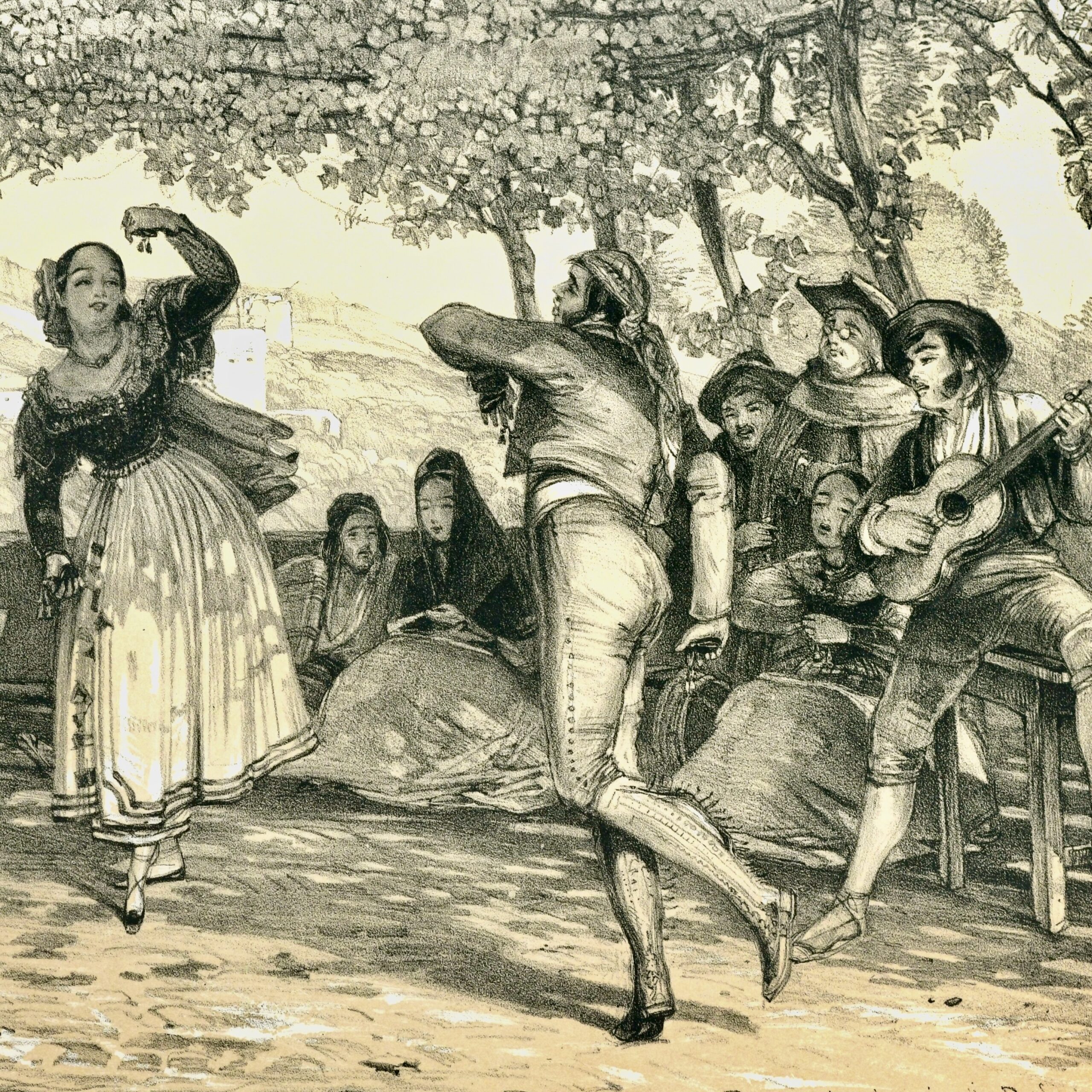
Andalucía: The dream of the South
Andalucía attracted more attention than any other region in Spain. The warm south was perceived as the essence of Spain, as exotic and alluring. Travellers were drawn to its vibrant traditions of flamenco, bullfighting, and Catholic rituals.
Explore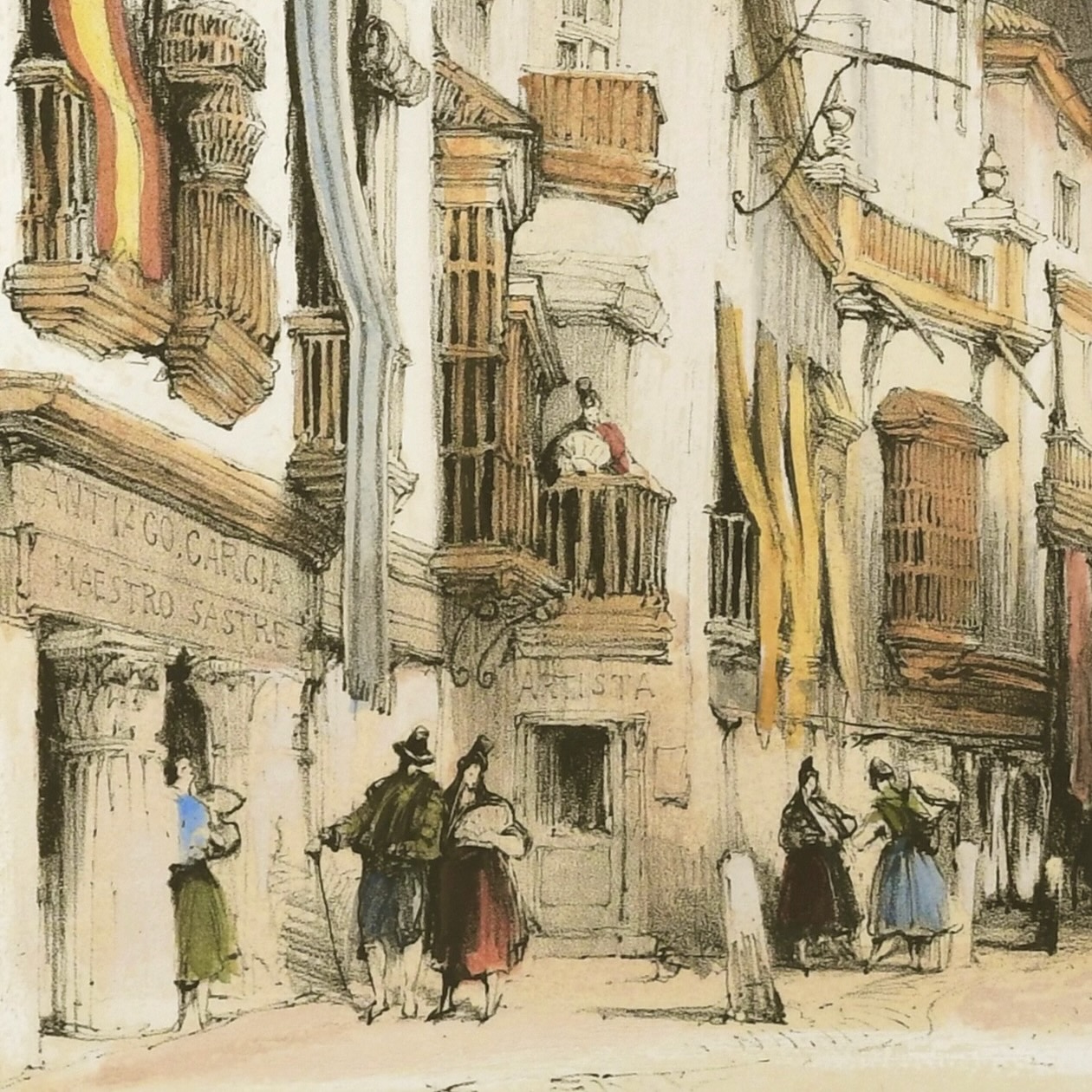
Seville
For any traveller in Spain, Seville, Andalucía’s capital, on the banks of the Guadalquivir river, was a must-see destination. Its architectural heritage, including Roman, Islamic, Mudéjar, Gothic and Baroque styles, along with its bustling everyday life and a rich Catholic culture provided a wealth of inspiration for romantic writers and artists in search of novel material.
Explore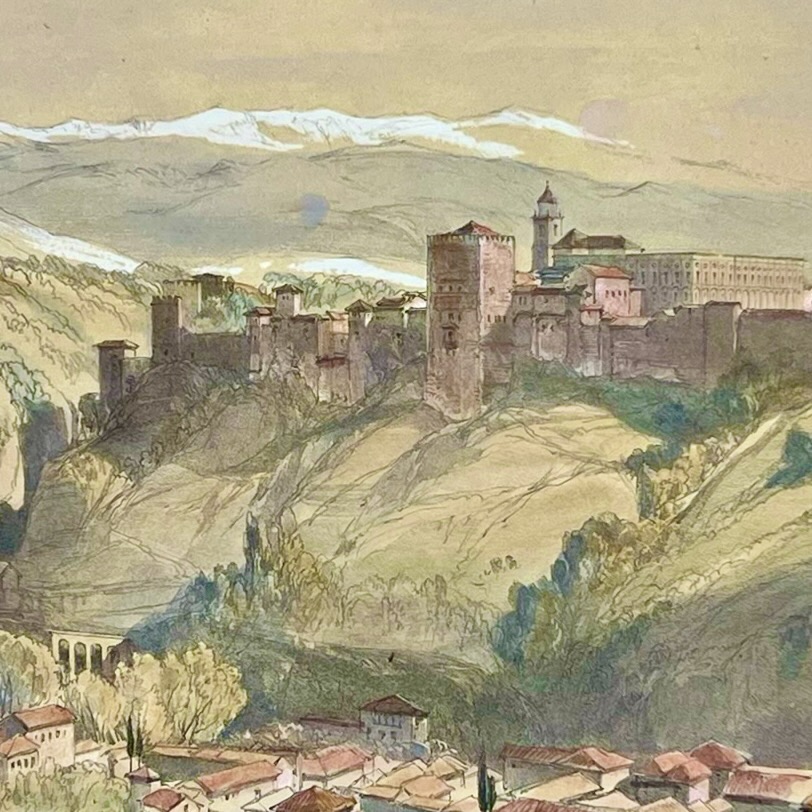
Granada
The Alhambra, the vast palace complex built by the Nasrid sultans in late medieval Granada, captivated the imagination of travellers like no other building in Andalucía.
Explore