Pathfinders
Britons who travelled for pleasure or education did not consider Spain as a possible destination until the early nineteenth century. Spain had never been part of the traditional Grand Tour, which took privileged travellers to Germany, France, Italy, and Greece. But towards the end of the eighteenth century Spain started to become an optional extra for those whose appetite was not fully satisfied by the Grand Tour, and by 1779, Madrid and Burgos had made it into the third edition of Louis Dutens’s popular guidebook to European cities (1.6).
Reassured by pioneers like Joseph Townsend that Spain was not a dangerous place to visit, British travellers ventured to the country both for professional reasons, and because they were increasingly drawn by the landscapes, monuments and art described and illustrated by amateur artists such as Henry Swinburne. These pathfinders provided new knowledge about the country in informative memoirs, preparing the ground for modern travel.
But it was the war against Napoleon that put Spain firmly in the headlines. In 1808 British soldiers under the command of Arthur Wellesley—later the Duke of Wellington—joined the Portuguese and Spanish in their fight against the Napoleonic occupation. With a victory that was both British and Spanish, the Peninsular War acquired the status of a grand national myth in both countries. Its sites of battles, key events, and heroes were celebrated in books, monuments, and artworks, while the memory of the war turned the battlefields into places of pilgrimage in the north and west of the country.
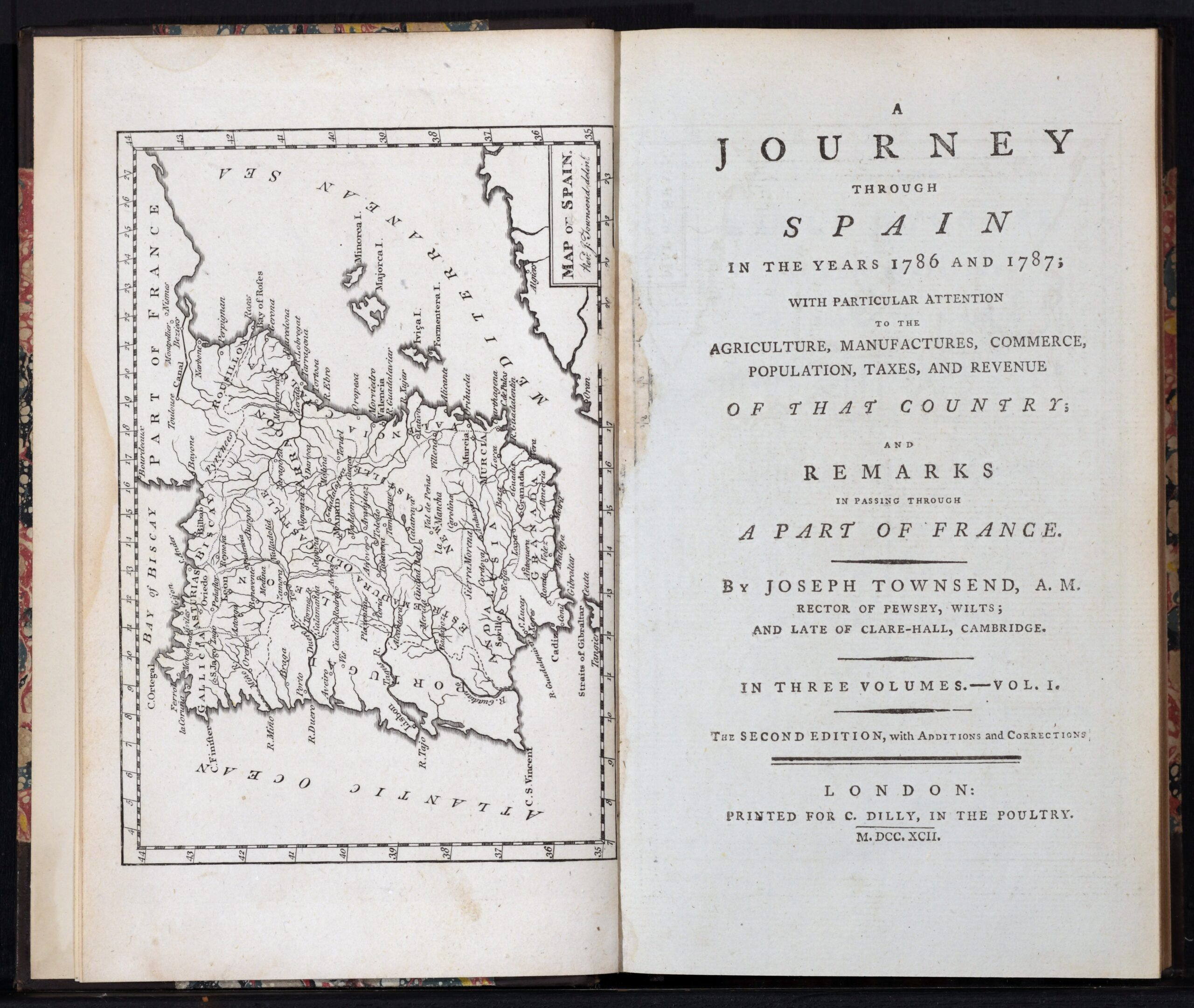
Frontispiece and title page from Joseph Townsend, A journey through Spain in the years 1786 and 1787
Joseph Townsend, 1792.
Barry Ife Collection.
Joseph Townsend, A journey through Spain in the years 1786 and 1787. Second edition; three volumes. London: C. Dilly, 1792. Volume 1, frontispiece and title page. Date: 1792.
Read the commentary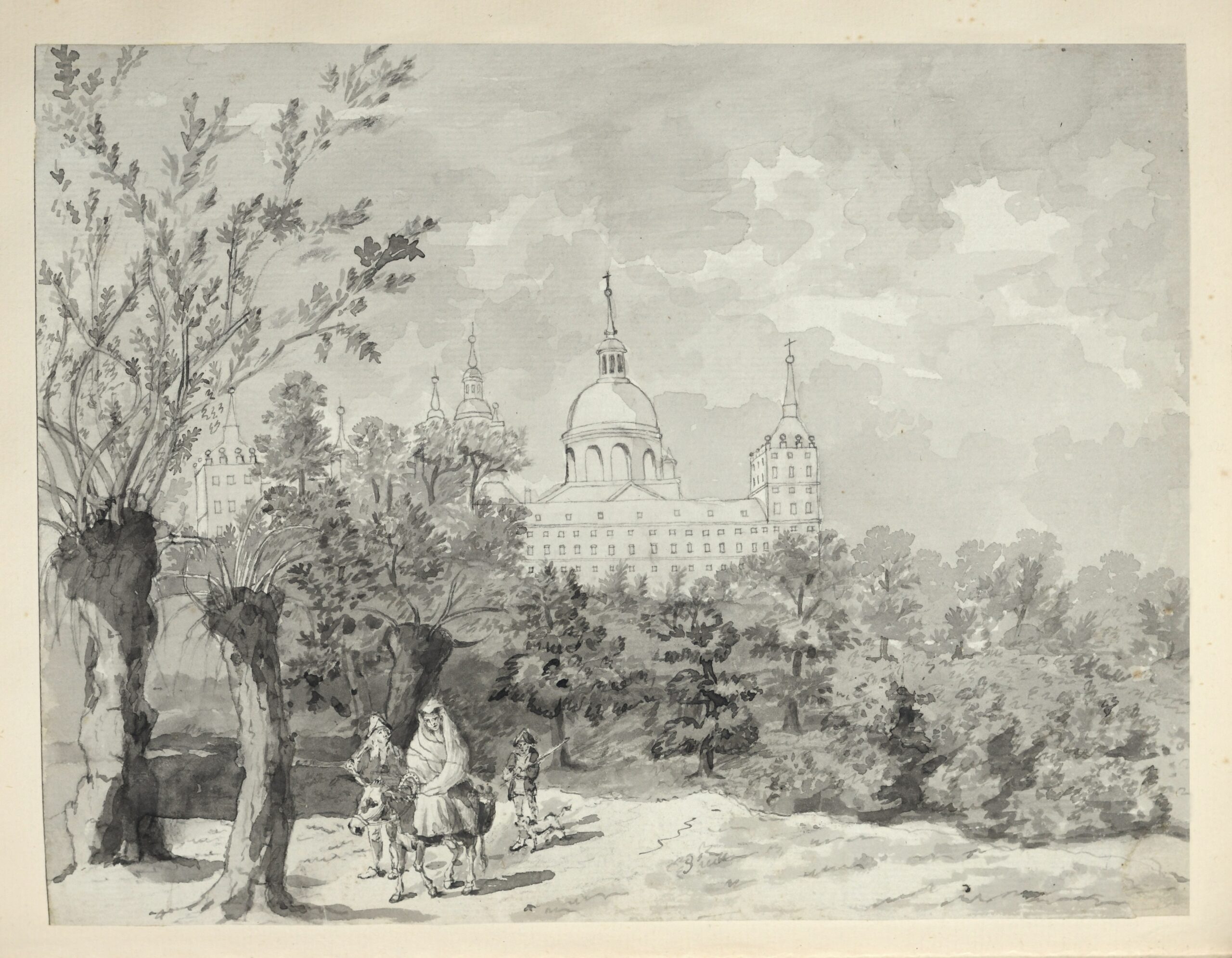
El Escorial
Joseph Townsend, 1786 .
Barry Ife Collection.
pasted into the author’s own copy of A Journey through Spain in the years 1786 and 1787, Bath: Gye and Son for the author. Third edition, two volumes. Volume 1, facing page 267
Read the commentary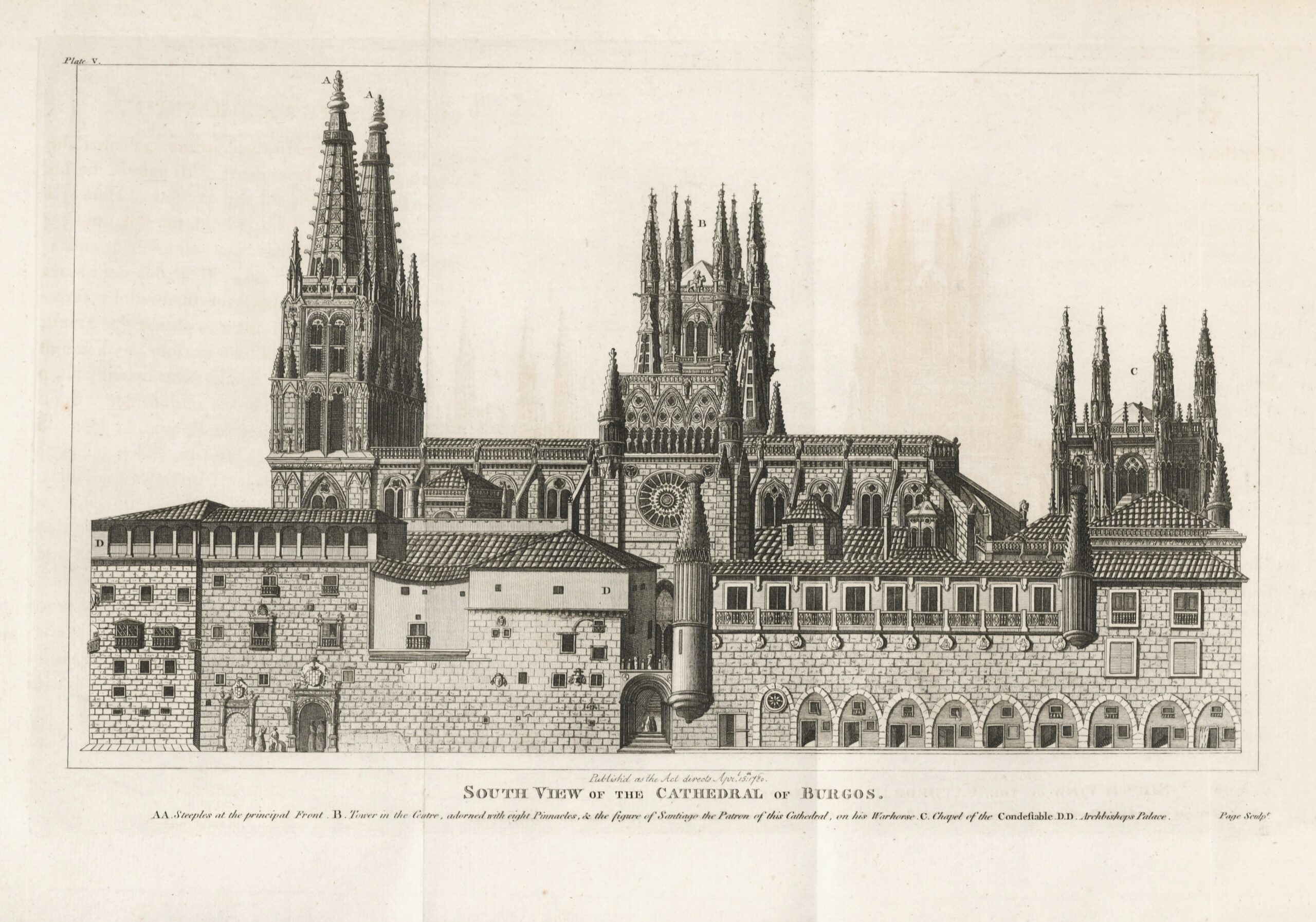
South View of the Cathedral of Burgos
[Robert?] Page, 1780.
Barry Ife Collection.
Plate 5 from John Talbot Dillon, Travels through Spain with a view to illustrate the Natural History and Physical Geography of that Kingdom. Second edition. London: Baldwin, 1782. Facing page 125.
Read the commentary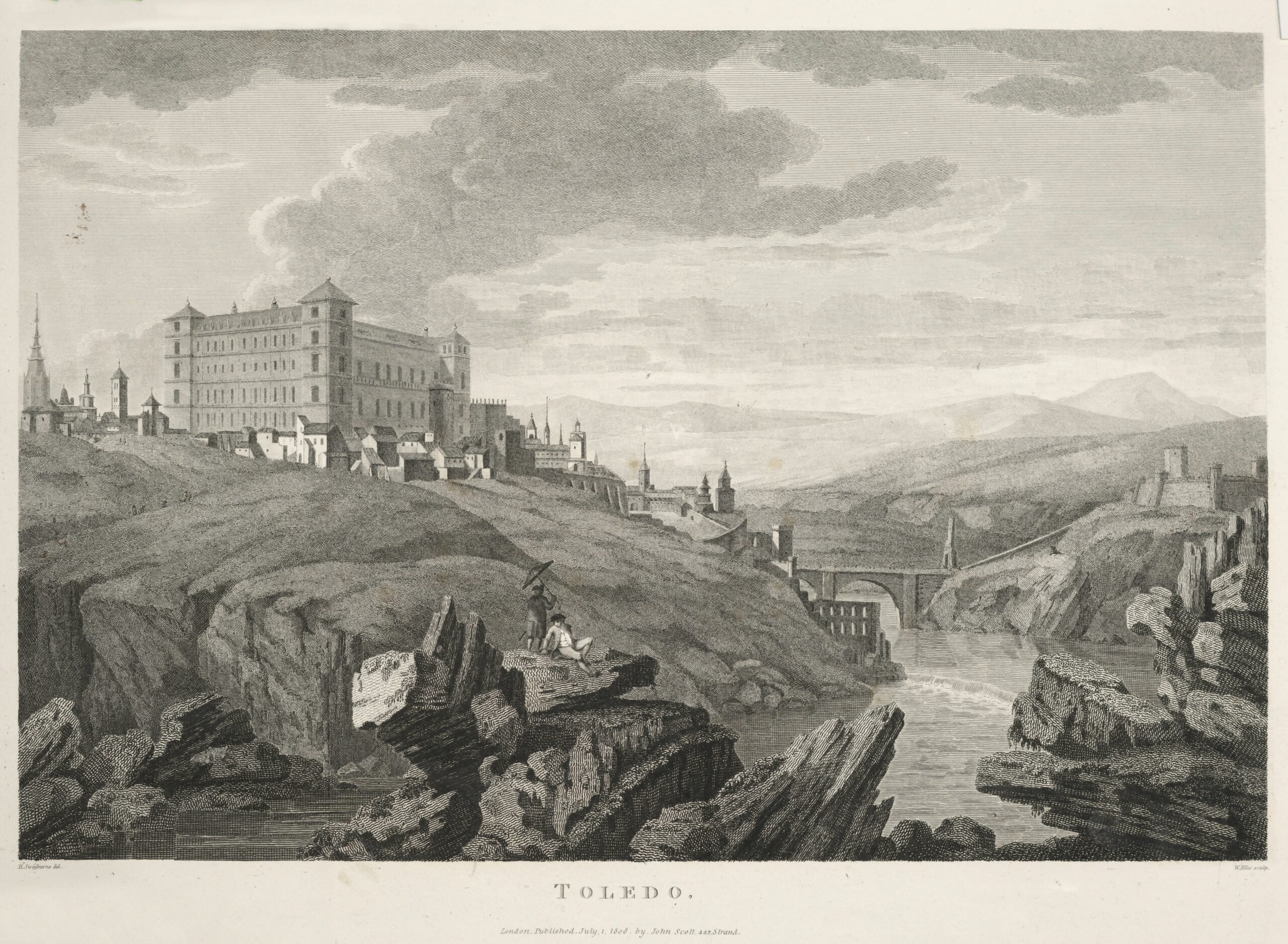
Toledo
William Ellis, 1806.
Barry Ife Collection.
Plate [8] from Henry Swinburne, Picturesque tour through Spain. Second edition. London: T. Bensley for John Stockdale, 1810
Read the commentary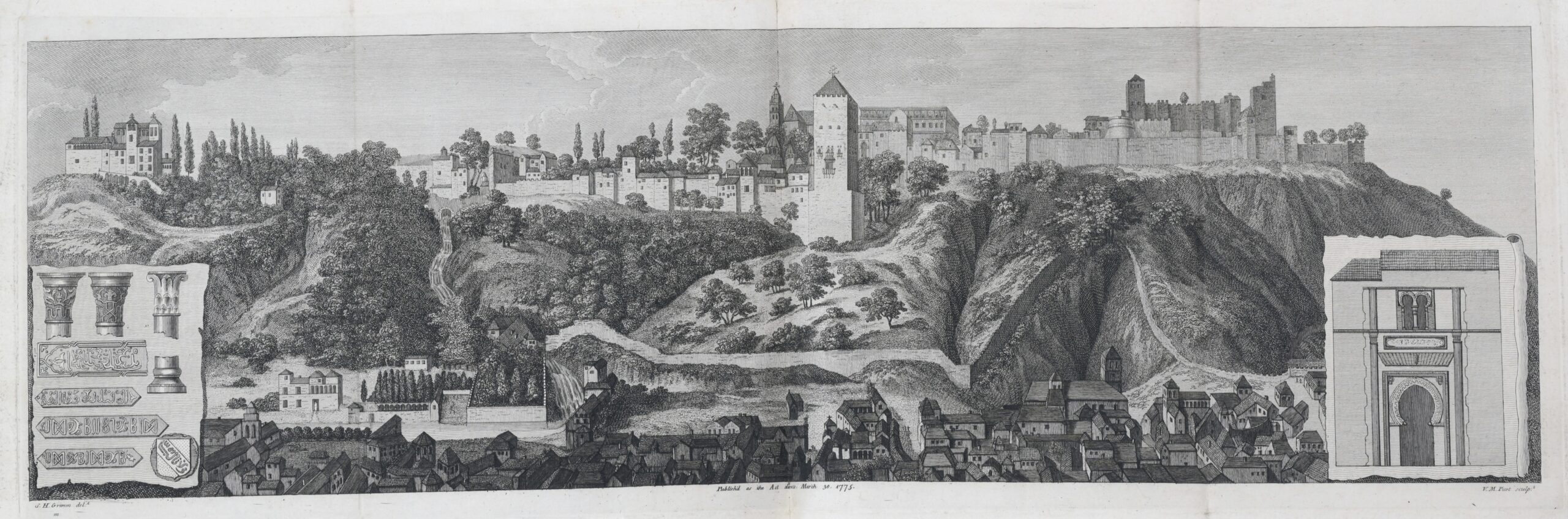
View of the Alhambra from San Nicolas
William Ellis, 1810.
Barry Ife Collection.
Plate [6] from Richard Twiss, Travels through Portugal and Spain in 1772 and 1773. Printed for the author, and sold by G Robinson, T Becket, and J Robson. London, 1775
Read the commentary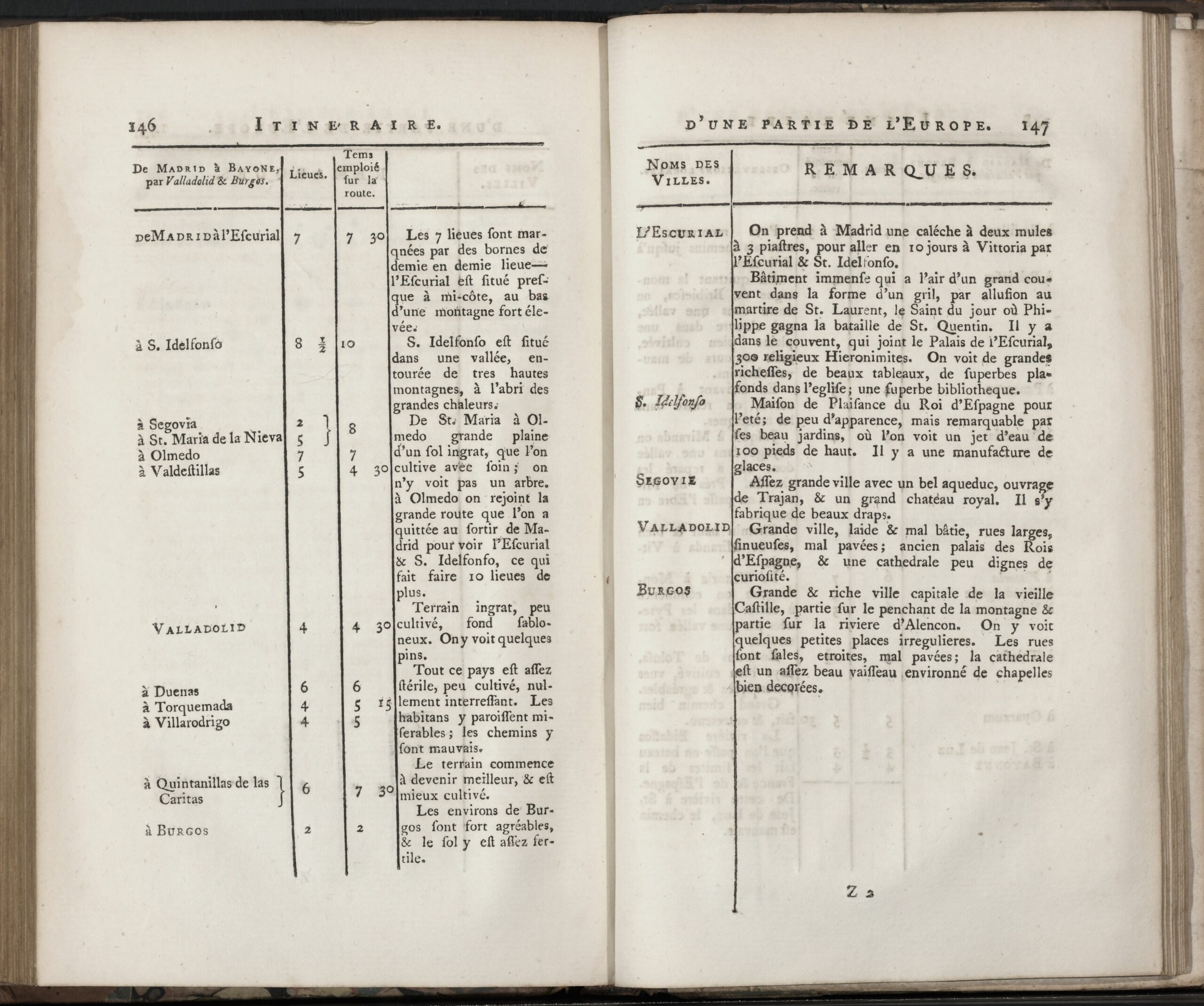
De Madrid à Bayone par Valladolid & Burgos
Louis Dutens, 1779.
Barry Ife Collection.
Louis Dutens, Itinéraire des routes les plus fréquentées ou Journal d’un voyage aux villes principales de l’Europe en 1768, 1769, 1770, 1771. Third edition. London: William
Read the commentary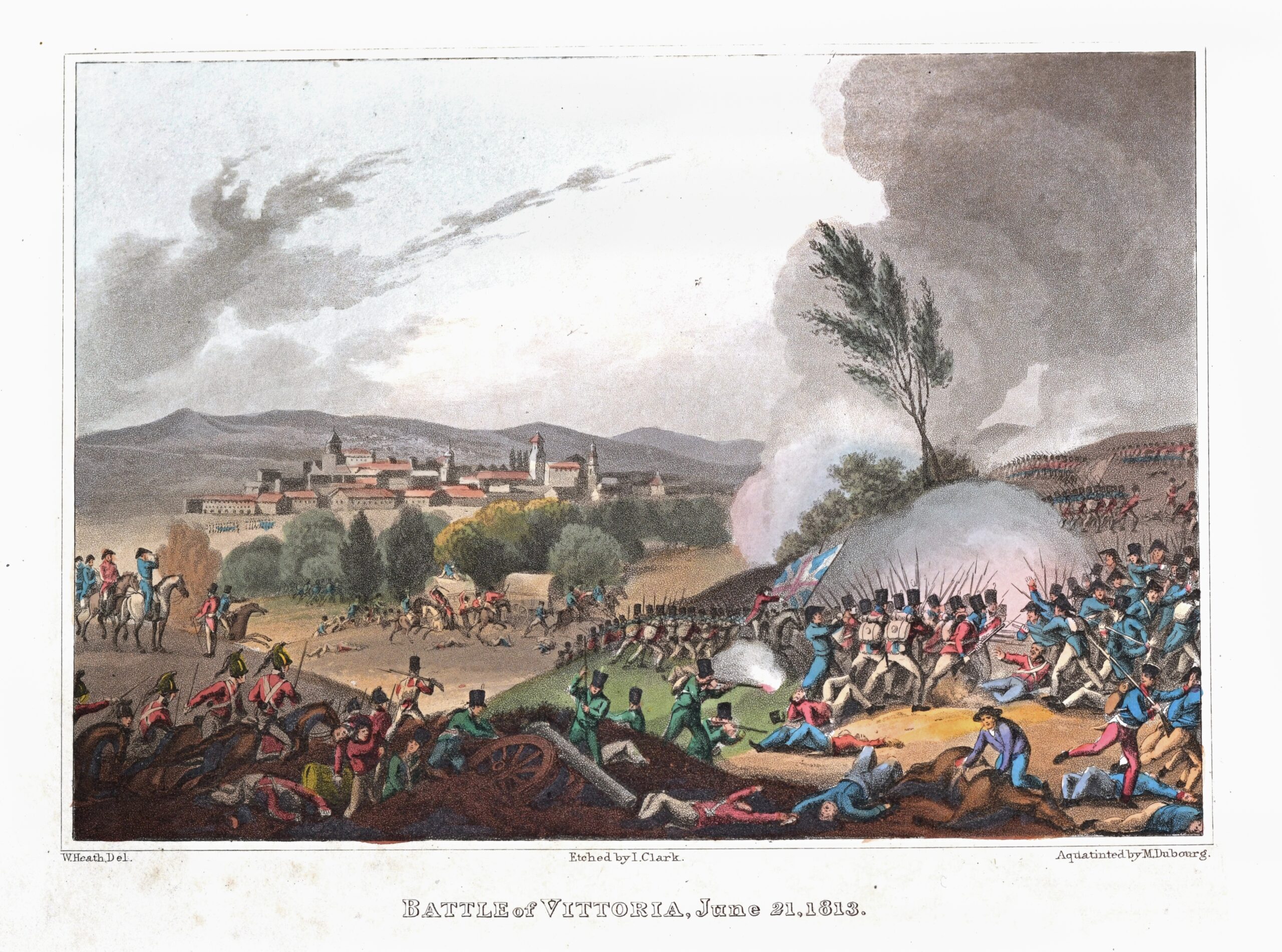
Battle of Vittoria
John Heaviside Clark and Matthew Dubourg, c. 1815.
Barry Ife Collection.
From James Jenkins, The Martial Achievements of Great Britain and Her Allies from 1799 to 1815. London: L Harrison and J C Leigh for the Author, circa 1815. Date: c. 1815
Read the commentary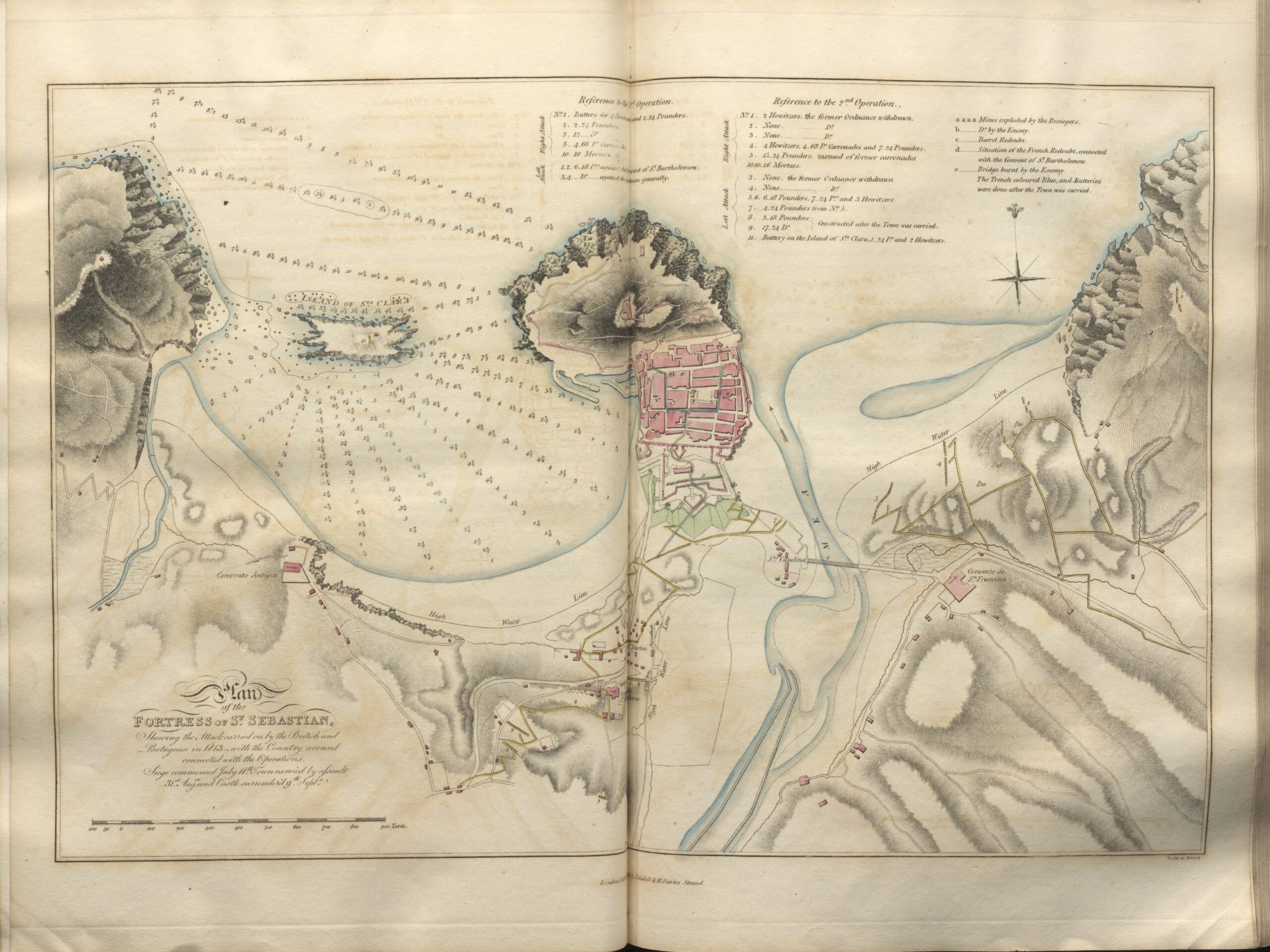
Plan of the Fortress of St. Sebastian
Samuel John Neele, 1818.
Foyle Special Collections Library, King’s College London.
George Thomas Landmann, Historical, military, and picturesque observations on Portugal: illustrated by seventy-five coloured plates. Two volumes. London: T Cadell and W Davies, 1818. Volume 1, facing page 589.
Read the commentary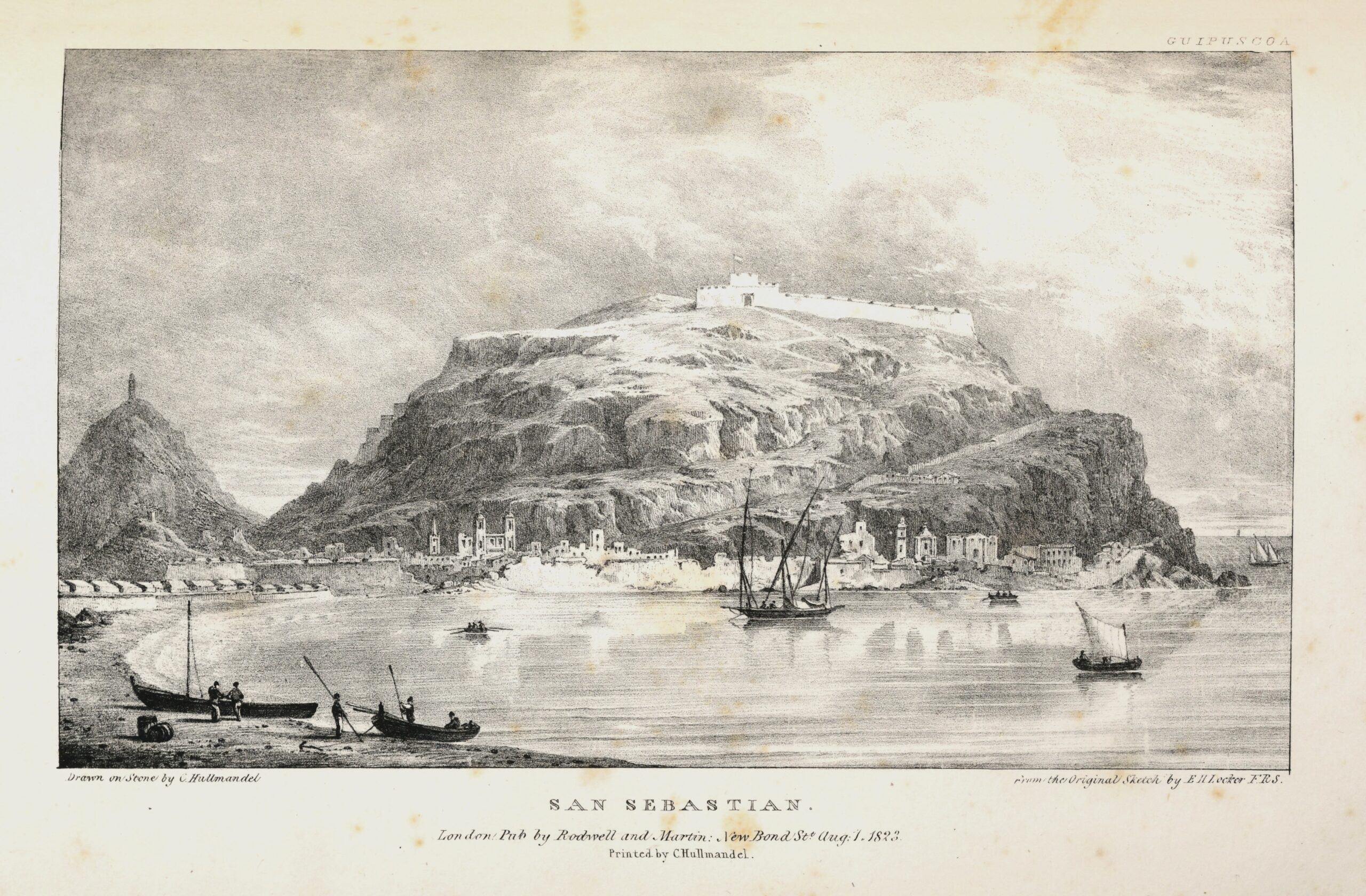
San Sebastian
Charles Joseph Hullmandel, 1824.
Barry Ife Collection.
Published: Plate [26] from Edward Hawke Locker, Views in Spain. London: John Murray, 1824
Read the commentary