Burgos, Segovia and El Escorial
Those visitors like George Vivian who sought out the site of the Battle of Vitoria in the north of Spain, soon re-joined what eventually became the well-trodden path through Old Castile to Madrid, via three major attractions: Burgos, the ancient capital of the kingdom of Castilla y León under Alfonso VI in the eleventh century; Segovia, historic centre of the wool and textile trade; and Philip II’s palace-monastery and royal pantheon at El Escorial. Eighteenth-century travellers had already admired Burgos Cathedral, as evidenced by the detailed architectural engraving by Robert Page featured in John Dillon’s Travels through Spain of 1780 (1.3). George Vivian’s take on Burgos – seen from a distance and characteristically soft focus – could not be more different, while David Roberts takes the viewer much closer to Burgos Cathedral, and Genaro Pérez Villaamil closer still, right inside the parish church of San Esteban.
Vivian’s panoramic view of Segovia, seen here in both his original sketch and the lithograph that Louis Haghe made from it, corresponds to the stereotypical idea of the fairy-tale castle. Roberts relied on the drawings of amateur artists to create evocative views of Segovia’s engineering marvel, the great aqueduct, as well as the castle. Similarly, Roberts’s two views of El Escorial, one distant and one close-up, are based on the drawings of others. Protestant travellers felt ambivalent about the palace-monastery. Richard Ford dismissed it as a ‘useless and colossal pile’, while others admired this royal site, which had been described since the sixteenth century as the ‘eighth wonder of the world’.
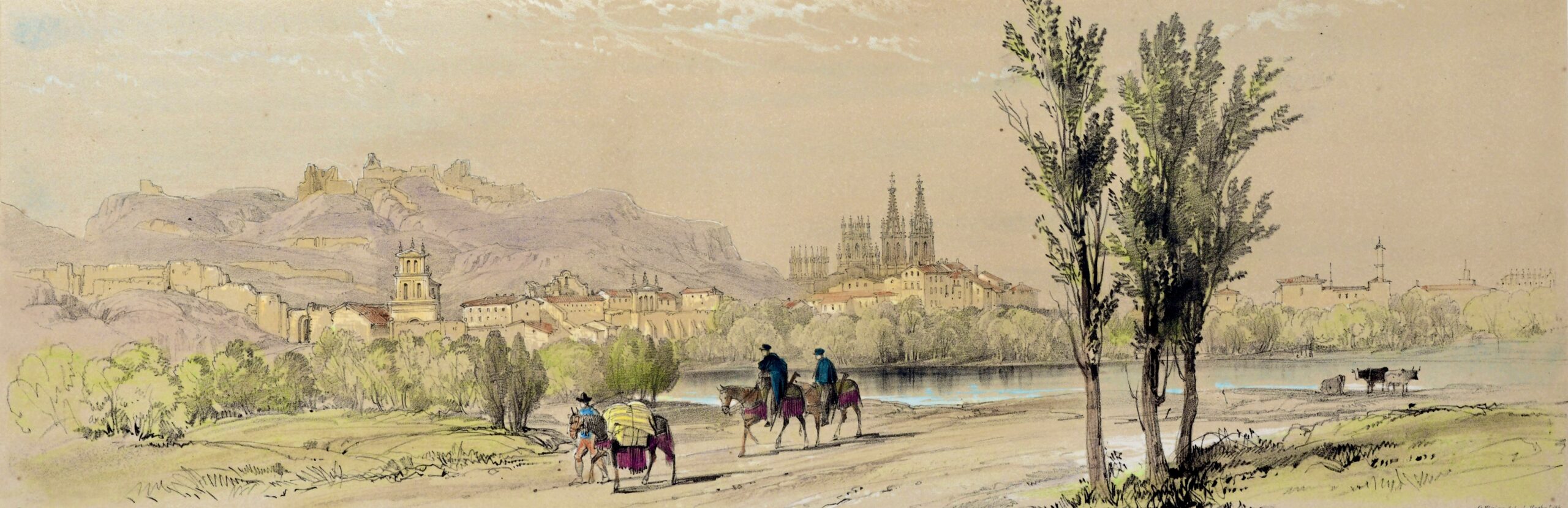
Burgos
Louis Haghe (1806-1885) after David Roberts (1796-1864), 1838.
Barry Ife Collection.
Plate 9 from George Vivian, Spanish Scenery. London: P & D Colnaghi, 1838
Read the commentary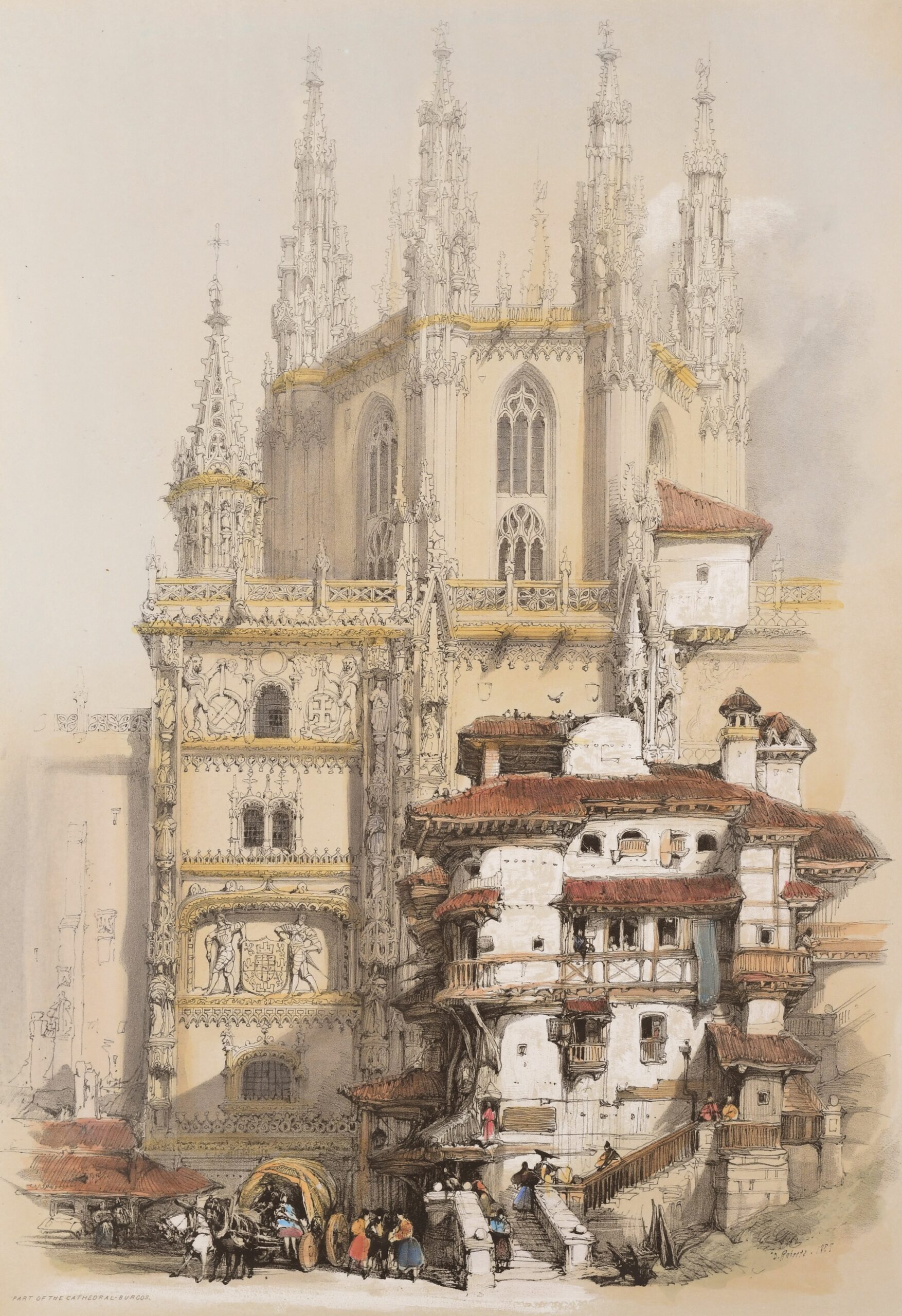
Part of the Cathedral, Burgos
Thomas Shotter Boys (1803-1874) after David Roberts (1796-1864) , 1837.
Barry Ife Collection.
Plate 7 from Picturesque sketches in Spain taken during the years 1832 & 1833. London: Hodgson & Graves, 1837. Date: 1837
Read the commentary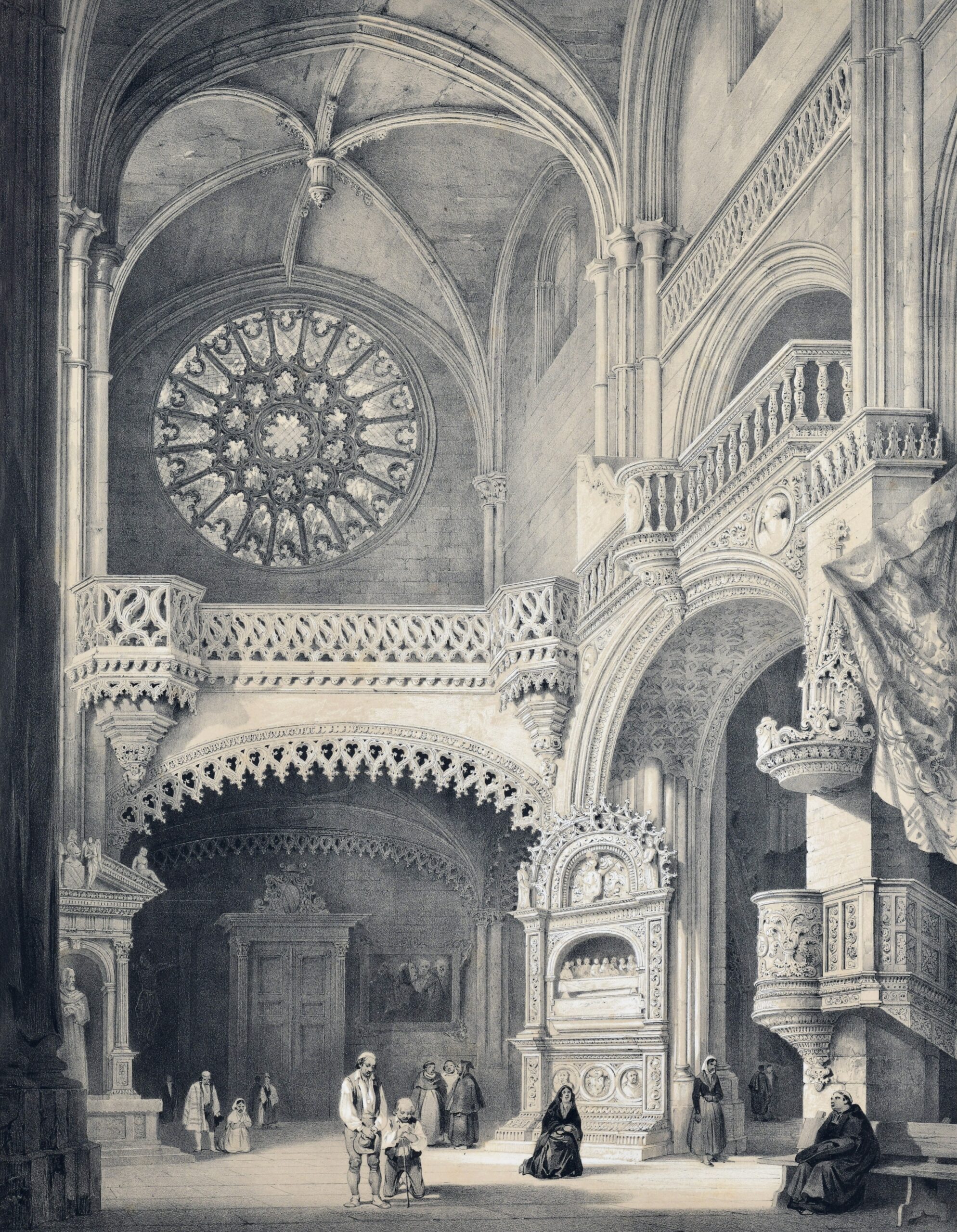
Parroquia de San Esteban en Burgos
Charles Claude Bachelier , 1842.
Barry Ife Collection.
Plate 42 from Genaro Pérez Villaamil and Patricio de la Escosura. España artística y monumental. Three volumes. Paris: A Hauser, 1842-50. Volume 1
Read the commentary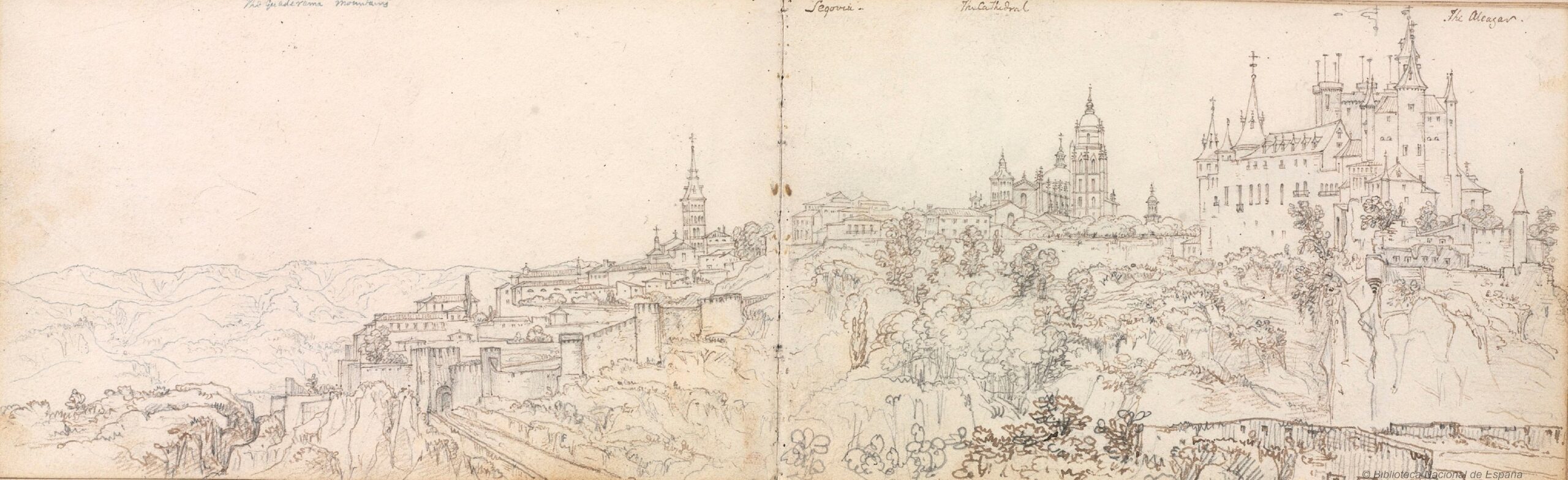
Segovia
George Vivian, 1833.
Biblioteca Nacional de España MS DIB/18/1/8691/19, ff 18v-19r.
Read the commentary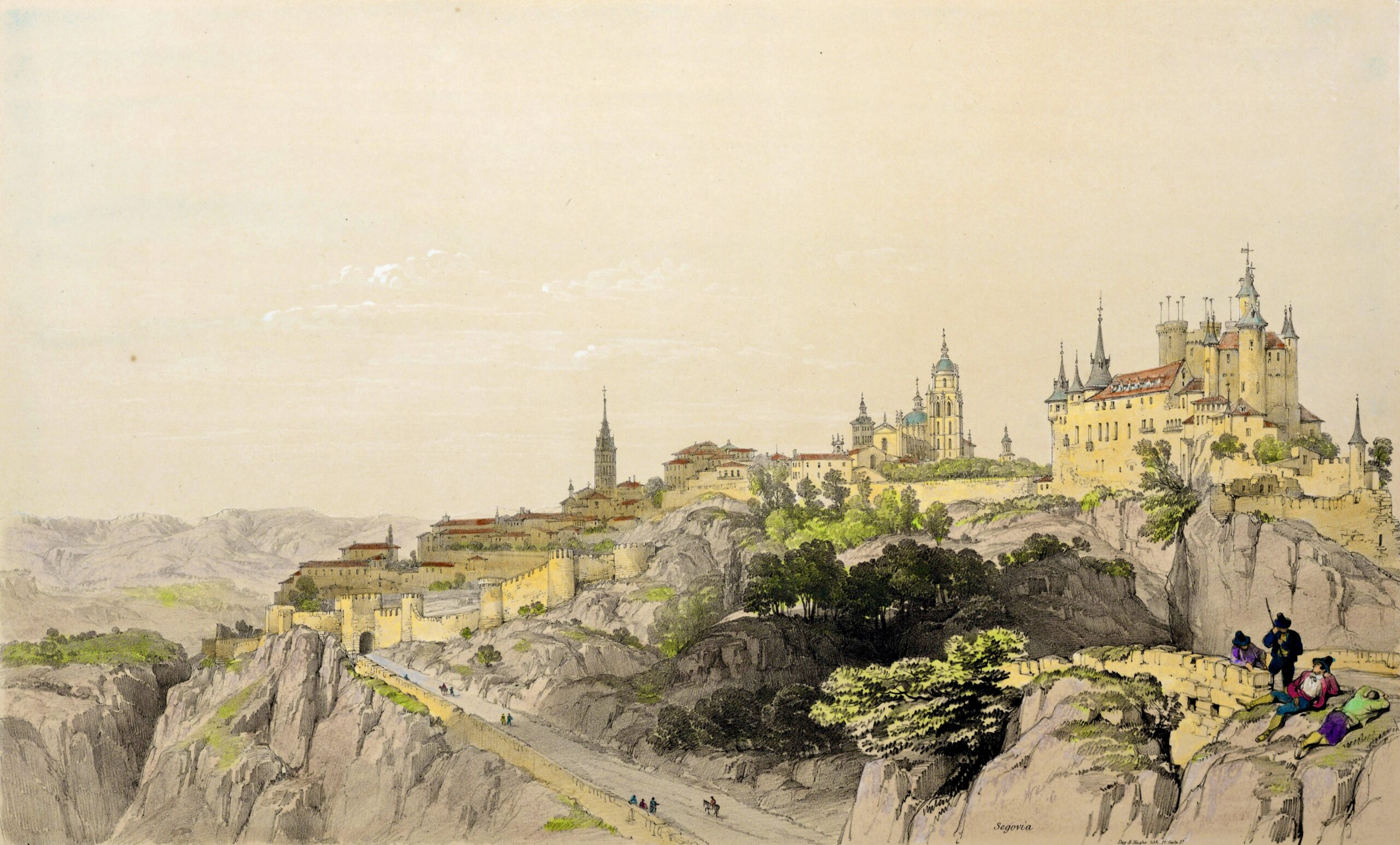
Segovia
Louis Haghe (1806-1885) after David Roberts (1796-1864), 1838.
Barry Ife Collection.
Plate 13 from George Vivian, Spanish Scenery. London: P & D Colnaghi, 1838
Read the commentary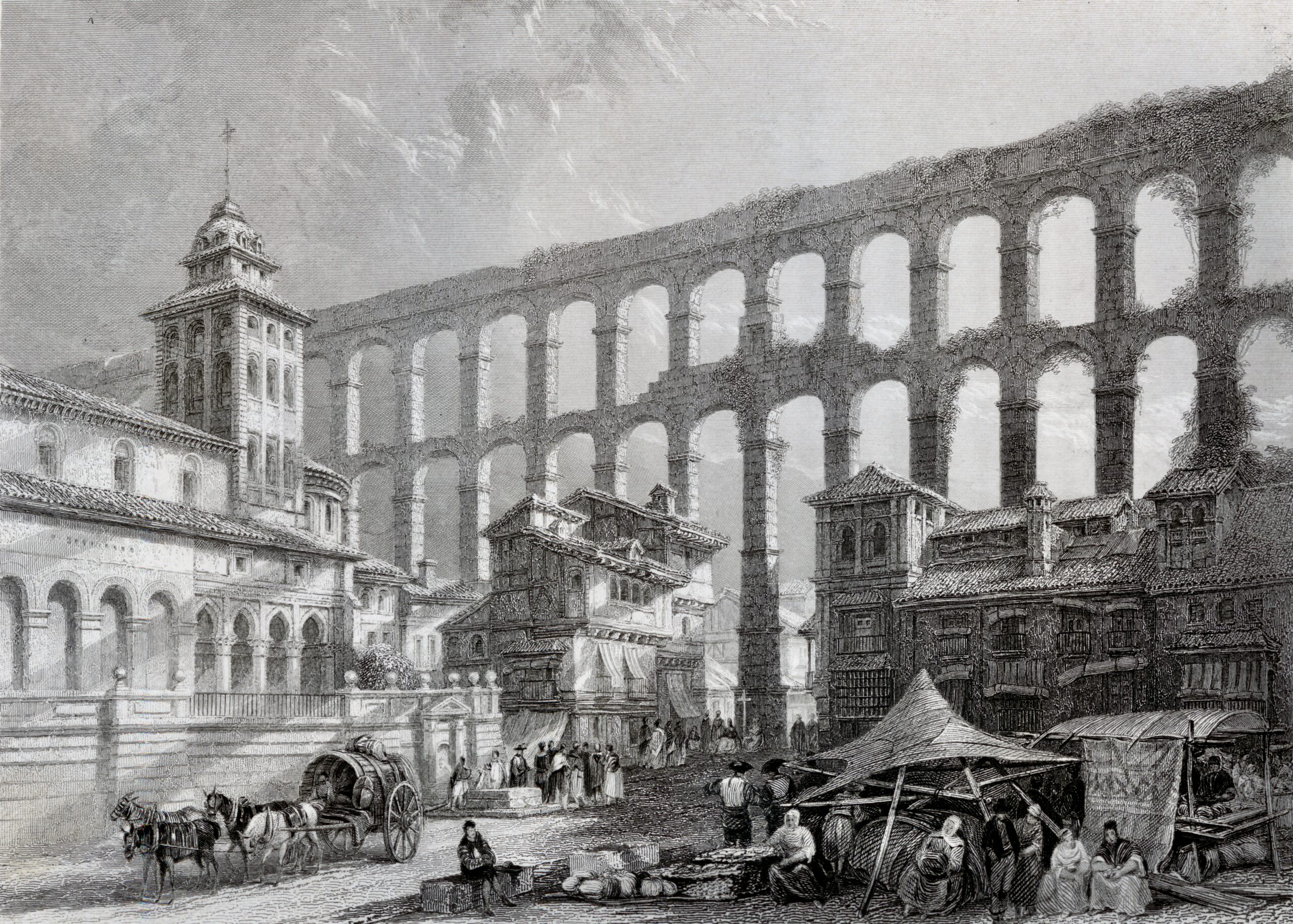
Great Roman Aqueduct at Segovia
James Charles Armytage, 1837.
Barry Ife Collection.
Plate [12] from Thomas Roscoe, The Tourist in Spain: Biscay and the Castiles. Illustrated from drawings by David Roberts.London: Robert Jennings & Co, 1837, facing page 106.
Read the commentary![Distant view of the Palace of the Escorial and mountains of the Guadarama [sic]](https://staging.zc-exhibitions.org/wp-content/uploads/2025/05/3.7-Roberts-Escorial-distant-scaled.jpeg)
Distant view of the Palace of the Escorial and mountains of the Guadarama [sic]
Thomas Sidney Cooper (1803-1902) after David Roberts (1796-1864), 1837.
Barry Ife Collection.
Plate 23 from David Roberts, Picturesque sketches in Spain taken during the years 1832 & 1833. London: Hodgson & Graves, 1837
Read the commentary![Palace of the Escurial [sic]](https://staging.zc-exhibitions.org/wp-content/uploads/2025/05/3.8-Roscoe-Escorial-scaled.jpeg)
Palace of the Escurial [sic]
Alfred Robert Freebairn, 1837.
Barry Ife Collection.
Plate [14] from Thomas Roscoe, The Tourist in Spain: Biscay and the Castiles. Illustrated from drawings by David Roberts. London: Robert Jennings & Co, 1837, facing page 137.
Read the commentary